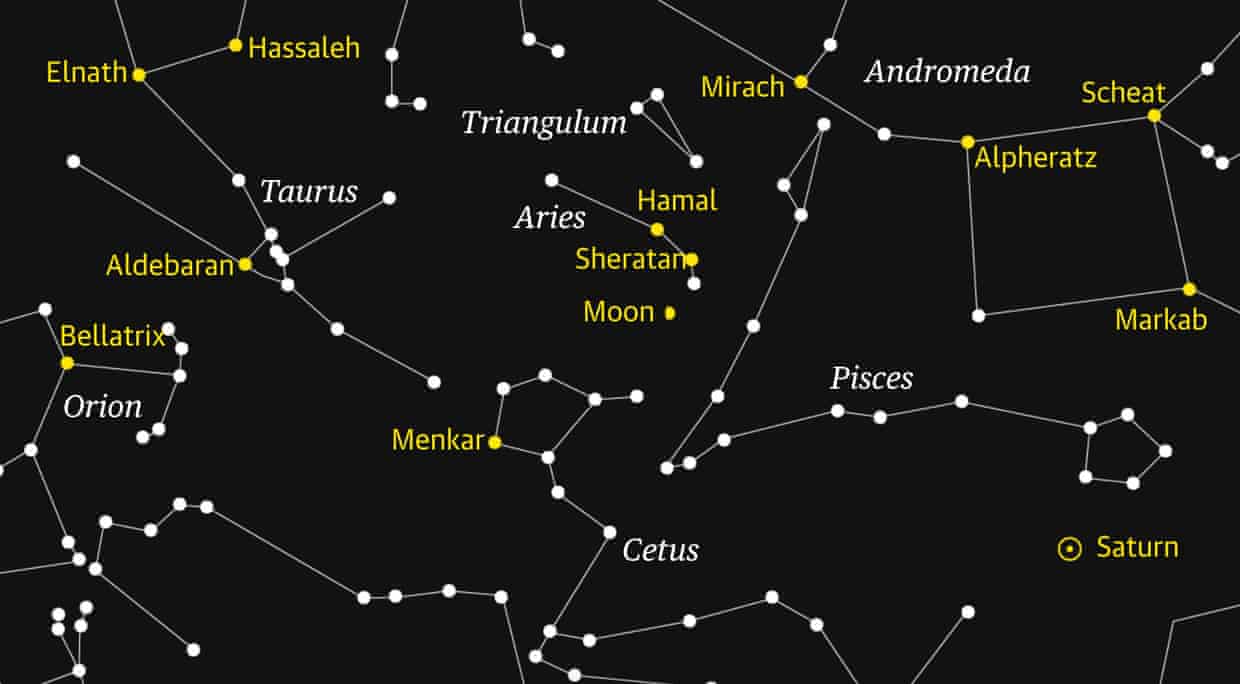
Sky enthusiasts can easily locate the constellation Aries this week, as it graces the winter skies. Positioned between Taurus to the east and Pisces to the west, Aries is best observed during the Northern Hemisphere’s deep winter months. This ancient constellation has a rich history, originally identified by the early Babylonians as a fieldworker but later recognized as a ram across various cultures.
In Egyptian mythology, Aries is associated with Amun-Ra, the ram-headed god representing creativity and fertility. In Greek mythology, it is linked to the golden fleece sought by Jason and the Argonauts. Despite its significance, Aries consists of only two notable stars, Hamal and Sheratan, which are relatively dim compared to the more prominent stars in the night sky.
For those looking to identify Aries, assistance comes this week from the moon. On the night of December 29, 2023, the moon will be 72% illuminated, serving as a helpful guide. Stargazers in London should look south at around 20:00 GMT to spot the constellation. Meanwhile, observers in the Southern Hemisphere can direct their gaze towards the north-west as the sun sets.
The constellation’s dimness often necessitates additional help for identification, and the moon’s brightness will enhance visibility. The clear night sky during winter provides an excellent opportunity for both amateur and seasoned astronomers to appreciate this lesser-known constellation.
Aries may not boast the brightness of its neighbors, but its historical significance and cultural connections make it a worthwhile target for those interested in the wonders of the universe. As the winter nights unfold, take a moment to connect with the stories of the past that have shaped our understanding of the cosmos.