The landscape of science and nature literature in 2025 showcases a rich array of thought-provoking titles addressing pressing issues of our time. This year, several works have emerged that not only delve into the complexities of artificial intelligence and extinction but also explore the intricate relationships between humanity and the natural world.
Challenging the Future of Artificial Intelligence
In a year marked by the rapid advancement of artificial intelligence, If Anyone Builds It, Everyone Dies by computer scientists Eliezer Yudkowsky and Nate Soares stands out. This alarming yet accessible text argues against the creation of superintelligent AI, suggesting that such developments could inadvertently lead to human extinction. According to the authors, “Even an AI that cares about understanding the universe is likely to annihilate humans as a side-effect,” highlighting the stark realities of technological progress and its potential consequences.
The discourse around extinction continues with Sadiah Qureshi‘s Vanished: An Unnatural History of Extinction. Shortlisted for the Royal Society Trivedi science book prize, this work examines how colonial expansion and social justice intersect with the concept of extinction. Qureshi’s research reveals the historical context of species eradication and questions the ethics of current initiatives aimed at “de-extincting” animals like woolly mammoths.
Exploring Nature and Our Place Within It
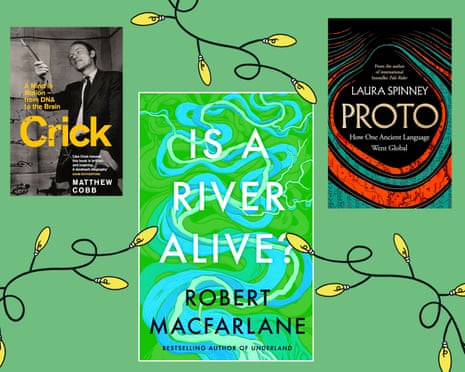
The theme of humanity’s connection to the environment is further explored in Robert Macfarlane‘s Is a River Alive?. This immersive narrative, shortlisted for the Wainwright prize for conservation writing, argues for the recognition of rivers as living entities deserving legal protection. Macfarlane writes, “was written with the rivers who flow through its pages,” encapsulating his deep passion for environmental advocacy.
Biologist Neil Shubin, known for his expeditions to extreme landscapes, invites readers on a journey to the Ends of the Earth. This book, also shortlisted for the Royal Society science book prize, discusses how climate change threatens these vital ecosystems that have shaped our planet for millennia.
Another notable title is The Forbidden Garden of Leningrad by historian Simon Parkin, which recounts the harrowing story of Russian plant scientist Nikolai Vavilov. As the city of Leningrad faced siege during World War II, Vavilov and his colleagues battled to protect their invaluable seed collection, a testament to humanity’s resilience in the face of disaster.
For those seeking a more optimistic perspective, cardiologist Eric Topol‘s Super Agers offers insights into longevity and health. Drawing from his research on the “Wellderly,” Topol provides evidence-based strategies to defy the ageing process, suggesting that advancements in medicine could revolutionize our approach to chronic diseases.
The complexities of human identity and medicine are sensitively examined in Suzanne O’Sullivan‘s The Age of Diagnosis. This work challenges the medical community’s tendency to label human experiences and invites critical discussions about the implications for those affected by long-term illnesses. In a similar vein, Masud Husain‘s Our Brains, Our Selves explores how brain disorders can dramatically alter one’s sense of self, providing poignant case studies that highlight the fragility of identity.
Lastly, Laura Spinney‘s Proto presents a fascinating exploration of the Proto-Indo-European language and its descendants, revealing how this ancient tongue influences contemporary languages. Spinney’s narrative combines linguistic, archaeological, and genetic evidence to weave a global story of human communication.
For those interested in the lives of significant scientific figures, Matthew Cobb‘s Crick offers an engaging biography of Francis Crick, who co-discovered the double helix structure of DNA. Cobb delves into Crick’s intellectual journey and his quest to understand consciousness, providing a comprehensive portrait of a pivotal figure in 20th-century science.
The exploration of the nuclear age is compellingly presented in Frank Close‘s Destroyer of Worlds. This account traces the history of nuclear physics from the 19th century to the devastating impacts of Hiroshima and Nagasaki, culminating in the story of the Tsar Bomba, the largest nuclear weapon ever detonated.
As readers sift through these remarkable titles, it becomes clear that the world of science and nature literature in 2025 is not only vibrant but also essential for understanding the challenges we face today. The insights offered by these authors encourage critical reflection on our role in a rapidly changing environment, ensuring that the conversation around these crucial topics continues to thrive.