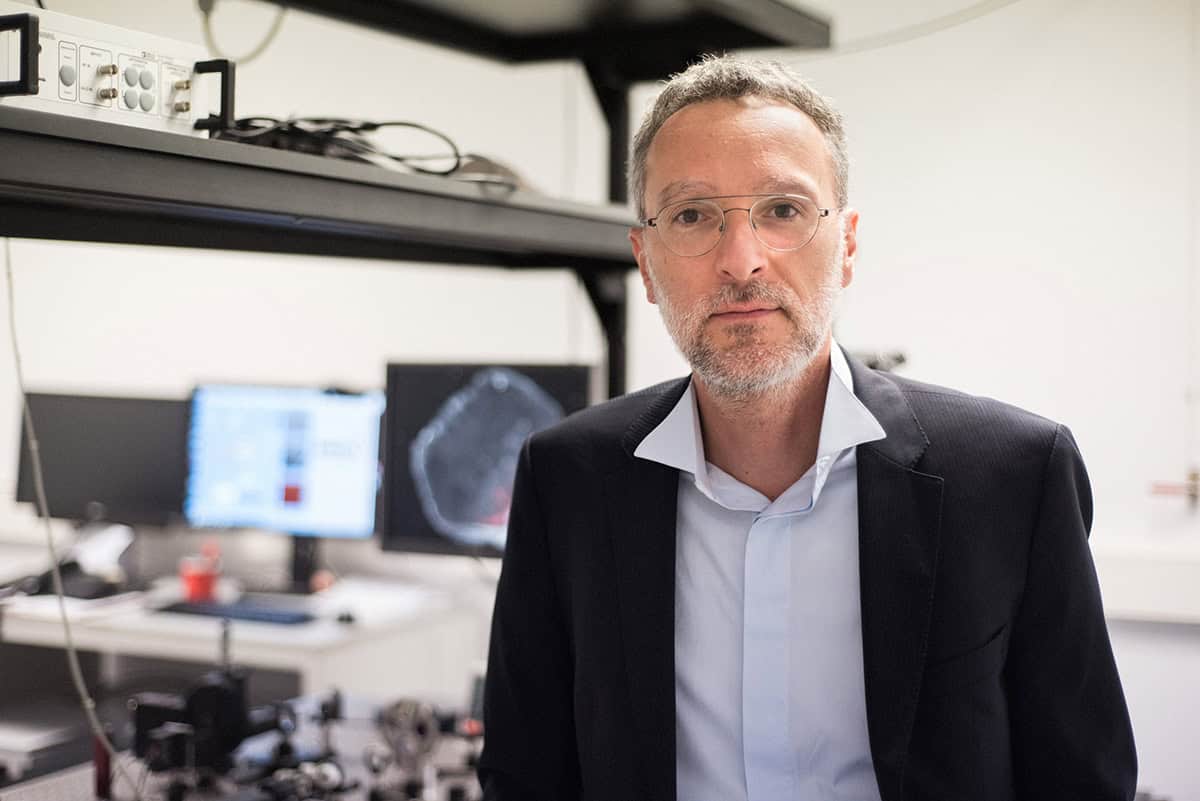
Giannis Zacharakis, a prominent figure in biophotonics and biomedical imaging, is making significant strides in the research landscape. As the CEO of the precision photonics company Kymatonics and a research director at the Institute of Electronic Structure and Laser (FORTH) in Greece, Zacharakis recently secured a competitive €2.1 million grant from the European Innovation Council (EIC) to advance their innovative wavefront-shaping objective lens technology. This funding marks a pivotal moment for Kymatonics as it aims to commercialize groundbreaking imaging technologies.
Zacharakis leads the Laboratory for Biophotonics and Molecular Imaging, where his work revolves around developing essential technologies to visualize biological processes in real-time. His dual role as both a researcher and an entrepreneur requires a unique blend of skills, emphasizing the importance of both analytical and interpersonal capabilities in achieving success.
Research, Communication, and Mentorship
Zacharakis emphasizes that at the core of his work is the ability to ask profound questions and navigate the path to discovery through scientific rigor. He explains that breaking down complex physical and biological challenges into manageable components is vital. This process involves critical analytical thinking, where one must determine whether observed phenomena are genuinely meaningful or merely artifacts of the instruments used or the data processing methods applied.
A significant part of his daily routine includes communication. Zacharakis regularly translates intricate technical concepts for students and colleagues from various disciplines, ensuring that those who may not share the same specialized vocabulary can still grasp essential ideas. He acknowledges that this effort to communicate effectively requires time and practice, but it is crucial for fostering collaboration across different fields.
Mentorship also plays a significant role in his work. Guiding students and budding scientists through experimental design and nurturing their independent thinking is both a responsibility and a source of personal fulfillment. He finds joy in witnessing young researchers transition from following instructions to confidently proposing their own ideas.
The Reality of Research: Challenges and Lessons Learned
Despite the fulfilling aspects of research, Zacharakis acknowledges the challenges that accompany it. Uncertainty is a constant presence in scientific exploration, with funding cycles, competitive grant applications, and unpredictable research outcomes often leading to setbacks. He stresses that not every idea will yield immediate results, and maintaining momentum requires resilience and persistence.
Zacharakis reflects on his own experiences, noting that early in his career, he believed clarity would come quickly through hard work. However, he learned that substantial progress often demands periods of ambiguity. Embracing this uncertainty, rather than viewing it as a shortcoming, is an important lesson he wishes he had grasped sooner.
Additionally, he emphasizes the importance of effective communication in scientific endeavors. Being technically correct is insufficient; ideas must be conveyed with structure, clarity, and narrative to resonate with diverse audiences. Writing and presenting well are not secondary skills but essential tools for any scientist.
Collaboration is another key aspect of Zacharakis’s philosophy. He believes that impactful discoveries increasingly occur at the intersections of different disciplines. Engaging with individuals who have varying perspectives not only challenges assumptions but also strengthens research outcomes.
In reflecting on career paths, he encourages aspiring scientists to recognize that there is no singular “correct” trajectory. Focusing on building transferable skills, analytical thinking, adaptability, and strong professional relationships will provide resilience in navigating various opportunities. He advises younger researchers to prioritize long-term depth and clarity of thought over short-term milestones, as these foundations will endure beyond any single achievement.
Ultimately, Giannis Zacharakis embodies the spirit of inquiry that drives scientific progress. His commitment to both mentorship and interdisciplinary collaboration highlights the importance of fostering an environment where curiosity thrives. As he continues to innovate in the field of biophotonics, Zacharakis remains dedicated to the pursuit of knowledge and the advancement of science.