A new interstellar visitor, known as 3I/ATLAS, has captured the attention of both the scientific community and the general public. This object, the third interstellar body observed in our solar system after ‘Oumuamua and 2I/Borisov, has raised questions about its trajectory and implications. Recent international astronomical data confirm that 3I/ATLAS is on a hyperbolic path, meaning it originated from outside the solar system and will soon depart, never to return.
Despite some online speculation suggesting otherwise, there is currently no credible scientific evidence indicating that 3I/ATLAS is on a collision course with Earth. Its closest approach occurred on December 19, 2025, when it passed approximately 1.8 astronomical units (AU), or about 170 million miles (approximately 270 million kilometers), away from our planet.
Scientific Observations Confirm Safety
3I/ATLAS was first detected on July 1, 2025, by the Asteroid Terrestrial-impact Last Alert System (ATLAS) and has since been tracked by multiple NASA spacecraft and global observatories. Notable instruments involved in observing this interstellar body include the Hubble Space Telescope, James Webb Space Telescope (JWST), and Solar and Heliospheric Observatory (SOHO).
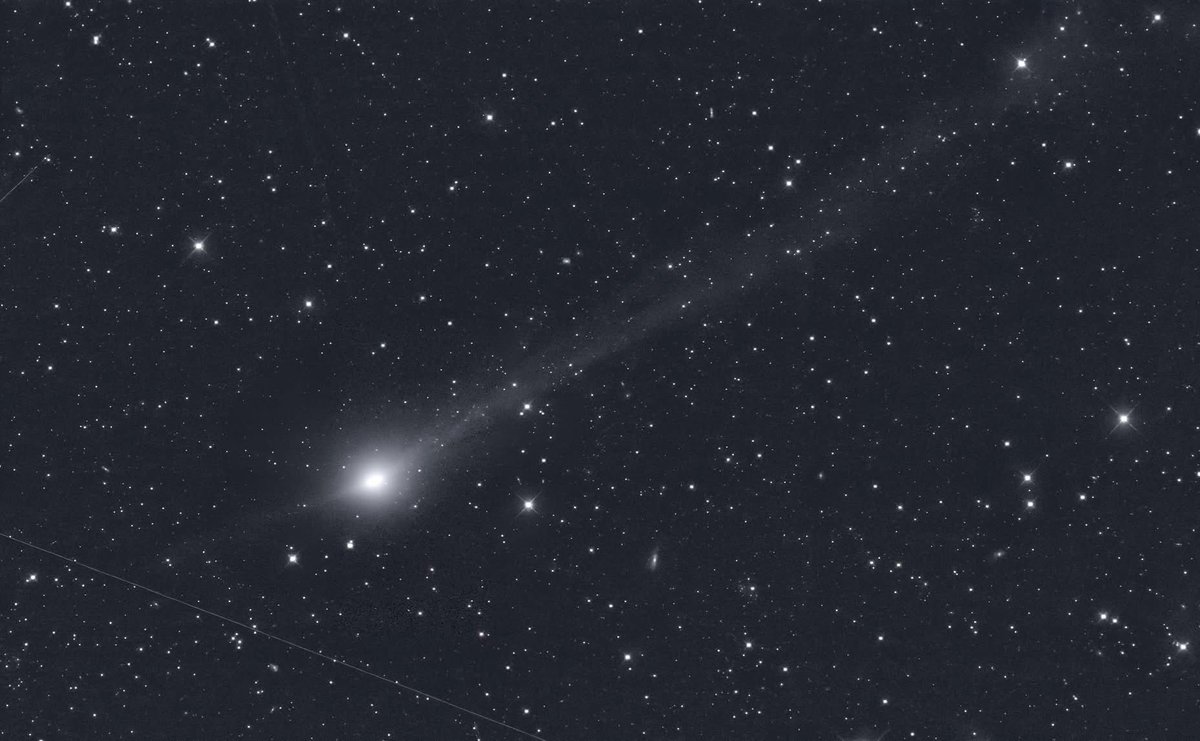
These observations revealed that 3I/ATLAS possesses a comet-like coma and tail, typical of icy bodies heated by the Sun. The object’s chemical composition, primarily carbon dioxide (CO2) with traces of water and carbon monoxide, aligns with characteristics expected of a primitive cometary body. While its origin is interstellar, scientists emphasize that 3I/ATLAS poses no threat to Earth.
Despite the weight of scientific evidence, speculation has emerged online regarding the nature of 3I/ATLAS. Some discussions have suggested that the object could be alien technology or on a collision course with Earth. These narratives are often fueled by statements from Harvard astrophysicist Avi Loeb, who has discussed perceived anomalies in the object’s behavior. He has raised concerns about NASA withholding certain imagery, such as a Mars Reconnaissance Orbiter image taken in early October 2025, which has not been publicly released.
Separating Facts from Speculation
Peer-reviewed data and official statements from NASA maintain that 3I/ATLAS’s trajectory and physical properties are consistent with natural comet behavior, even if it exhibits some unusual characteristics. Independent experts in planetary science reiterate that there is no evidence supporting claims of the object maneuvering in an intelligible or controlled manner.
Online forums have seen numerous anecdotal claims regarding the object’s brightness and unusual features. However, astronomers caution that such variations can arise from normal rotational effects and viewing geometry. No observational data indicates that 3I/ATLAS is altering its course toward Earth or exhibiting controlled behavior.
The excitement surrounding interstellar objects like 3I/ATLAS lies in their rarity and the insights they provide into the formation of planetary systems. As the object continues its journey, the detailed spectroscopic data collected will significantly enhance our understanding of dust composition and planetary system evolution beyond our own.
In conclusion, rather than representing a potential threat, 3I/ATLAS offers a unique opportunity for scientific study. As it exits the solar system, it leaves behind a trail of curiosity and knowledge that could illuminate the mysteries of our universe.