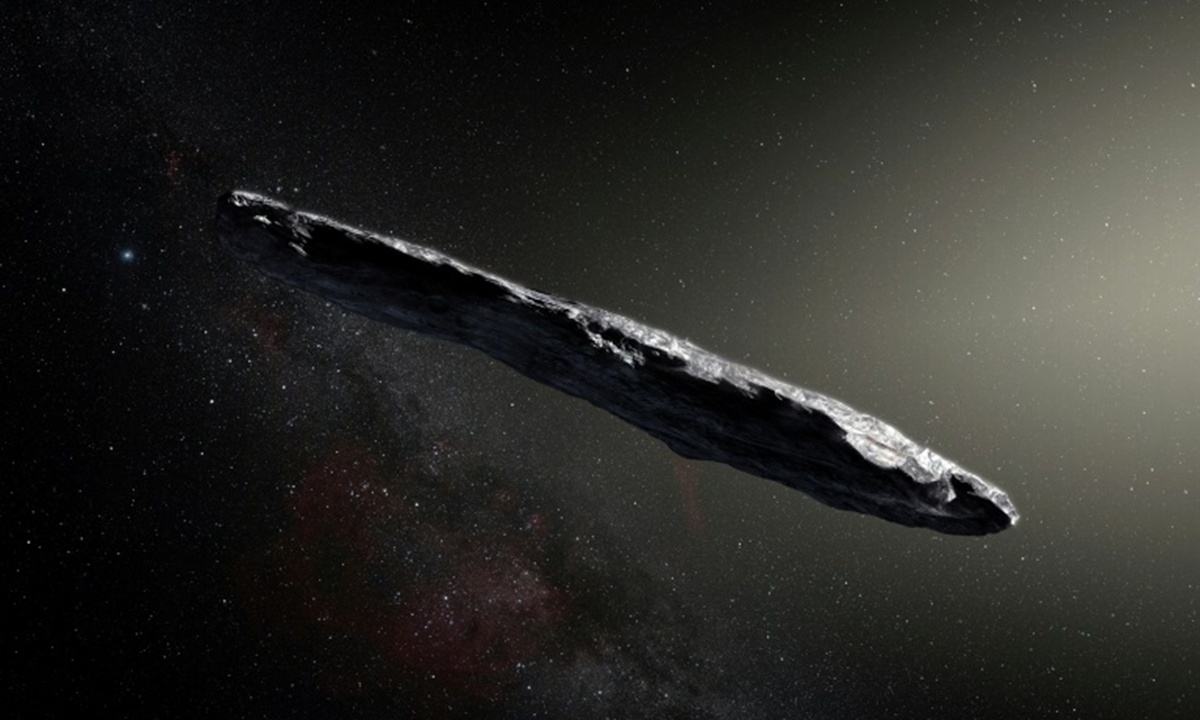
A recent TikTok video has ignited discussions about extraterrestrial life, claiming that a NASA insider revealed interstellar Comet 3I/ATLAS exhibits signs of “active manoeuvring.” The clip, shared by user @platet_earth, suggests the comet’s behavior deviates from that of a typical celestial object. As the video gains traction on social media, astronomers are eager to clarify the distinction between speculation and scientific fact.
Comet 3I/ATLAS, detected on July 1, 2025, by the Asteroid Terrestrial-Last Alert System (ATLAS), is only the third interstellar object observed in our Solar System. It reached its closest approach to the Sun on October 29, 2025, coming within approximately 210 million kilometers—about 1.4 times the distance between Earth and the Sun. This positioning placed it on the opposite side of the Solar System, limiting visibility until ground telescopes resumed observations recently.
Astronomers emphasize that 3I/ATLAS is notable not for alleged alien maneuvers, but rather for its remarkable age and unique composition. Research indicates that the comet could be over seven billion years old, predating the formation of our Solar System. Notably, its carbon dioxide levels are unusually elevated, and its nickel-to-other-elements ratio diverges from those of most nearby comets. These characteristics could provide insights into the chemistry of the distant system where 3I/ATLAS originated.
As excitement builds around the potential for alien life, experts caution against jumping to conclusions about extraterrestrial control. The “alien question” often arises when unusual celestial events occur, but history has shown that such theories can quickly gain momentum without substantial evidence. According to Live Science, similar speculation has surrounded previous interstellar visitors, such as ‘Oumuamua and Comet 2I/Borisov. The phenomenon dates back to 1967 when scientist Jocelyn Bell Burnell humorously dubbed a newly discovered radio signal “LGM 1,” short for “Little Green Men.” Although she did not believe it was of alien origin, the story attracted significant attention, highlighting the allure of sensational claims.
Experts assert that extraordinary claims necessitate extraordinary evidence. The data currently available for Comet 3I/ATLAS does not indicate any propulsion or changes in trajectory suggesting intelligent control. Despite the dismissal of alien theories, 3I/ATLAS remains one of the most fascinating cosmic visitors documented thus far. Its unusual characteristics and extensive journey through space offer a unique opportunity to study material that predates our Sun.
Astronomers intend to continue monitoring Comet 3I/ATLAS through various ground telescopes and missions from the European Space Agency, including Mars Express, the ExoMars Trace Gas Orbiter, and the Jupiter Icy Moons Explorer. These efforts will facilitate detailed observations without relying on speculative narratives.
The interest in alien life is understandable, yet scientists urge that curiosity should spur patience rather than panic. As one astronomer noted, embracing “uncertainties, mysteries, and doubts” is essential for driving discovery. While Comet 3I/ATLAS may not unveil evidence of extraterrestrial life, it presents an equally thrilling prospect: a rare glimpse into material older than our Solar System. This, researchers contend, could provide invaluable insights about the universe, far surpassing the fleeting intrigue of viral videos.