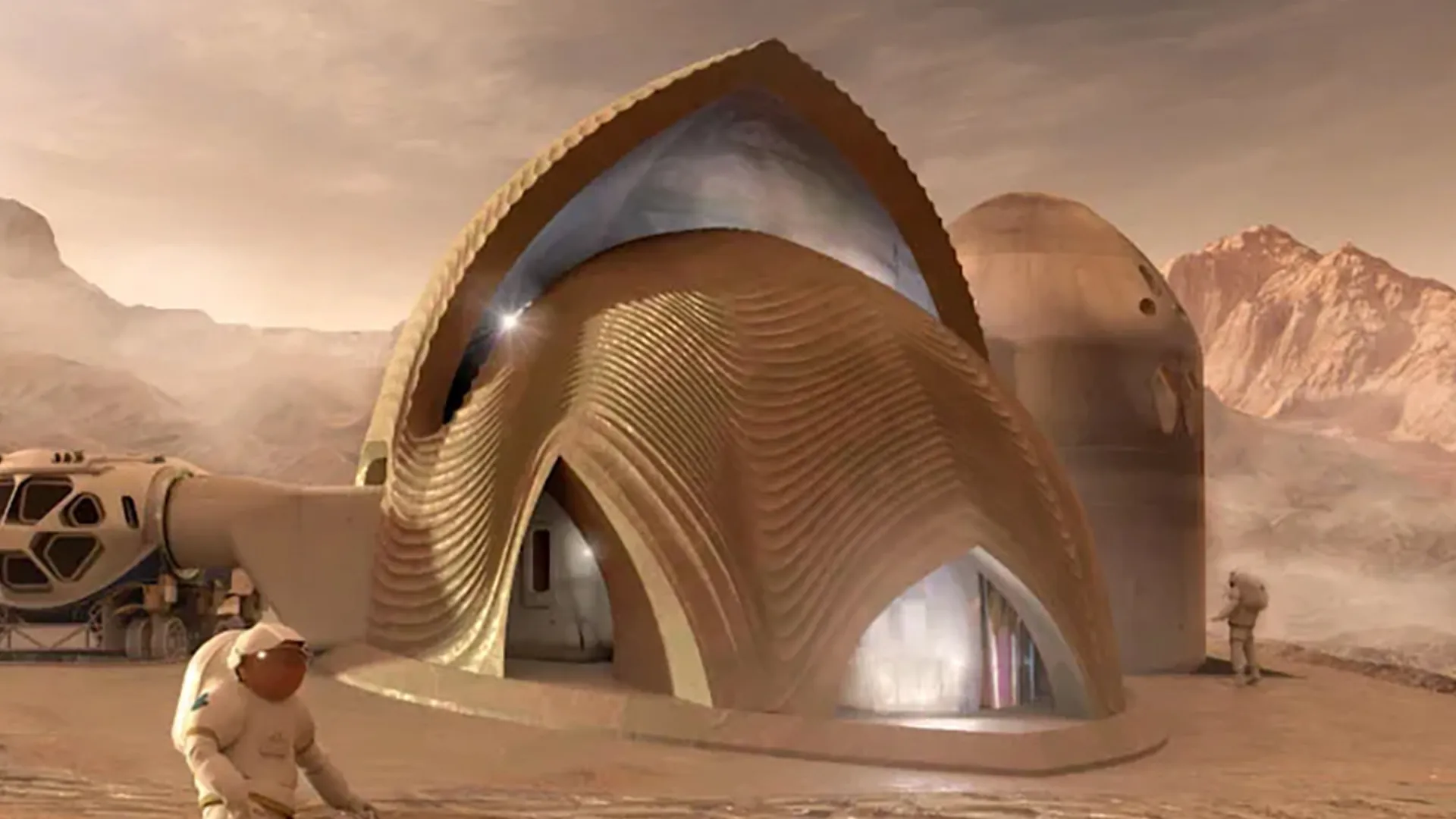
Future colonists on Mars and the Moon may reside in advanced 3D-printed habitats crafted by robotic builders, according to designs showcased during the NASA Centennial Challenge. This four-year initiative invited designers to conceptualize printable living spaces for deep space exploration, revealing potential structures that could support human life beyond Earth.
NASA aims to create habitats that require minimal human intervention for construction. The challenge emphasizes using local materials, such as Martian soil, to facilitate building processes. Steve Jurczyk, NASA’s Associate Administrator, highlighted the importance of recycling and utilizing resources already present at potential colonization sites. “Shelter is an obvious necessity as we prepare to explore worlds beyond our home planet,” he stated during the challenge, reinforcing the need for sustainable solutions in space exploration.
Key Habitat Concepts for Martian Living
The designs emerging from the challenge offer a range of innovative solutions. Notably, the concept developed by Hassell and EOC features a fleet of wheeled mining robots. These machines would excavate Martian regolith, which could then be processed into building materials. The resulting structures are designed to blend seamlessly with the Martian landscape, utilizing local resources for both aesthetic and practical purposes.
Another intriguing design comes from Kahn-Yates, which proposes a habitat featuring a dual-shell structure made of polymer. This design includes a layer of “sulphur concrete” that can be strategically omitted to allow natural light into the living spaces. The structure is intended to function like a townhouse, with panels that unfold to create multiple floors.
The Mars Incubator concept organizes habitats in a hub-and-spoke layout, optimizing living space. Central to this design is a large living area constructed from polyethylene and basalt fiber, with robots tasked with assembling these components directly on the Martian surface. Beneath each unit, essential life support systems would ensure the safety and comfort of inhabitants.
Advanced Technologies for Space Habitats
Team AI. SpaceFactory has envisioned a towering habitat made from bioplastic reinforced with basalt fiber. This cylindrical design maximizes usable living space while minimizing structural stress. The double-shell structure allows for thermal expansion and contraction, accommodating the significant temperature fluctuations expected on Mars.
In a different approach, Northwestern University proposes a habitat that combines 3D printing with inflatable structures. Rovers would establish a foundation using 3D printing technology before deploying an inflatable shell, which would then be protected by an outer printed shell. This modular design would allow for versatile living arrangements, including laboratories and dining spaces.
The SEArch+/Apis Cor collaboration focuses on radiation protection, a critical factor for the health of space colonists. Their design incorporates high-density polyethylene and Martian regolith, creating a structure with overlapping shells that allow natural light while shielding residents from harmful radiation.
Finally, Team Zopherus has developed a concept featuring a mobile 3D printer. This system would utilize robots to extract local materials from the Martian surface, including calcium oxide and Martian rock, which could then be processed into building materials. Once a habitat is completed, the printer would relocate to initiate the process anew.
While these innovative designs are still conceptual, they represent significant advancements in the quest for sustainable living solutions in space. With ongoing exploration efforts and technological developments, the vision of 3D-printed homes on Mars could one day become a reality.