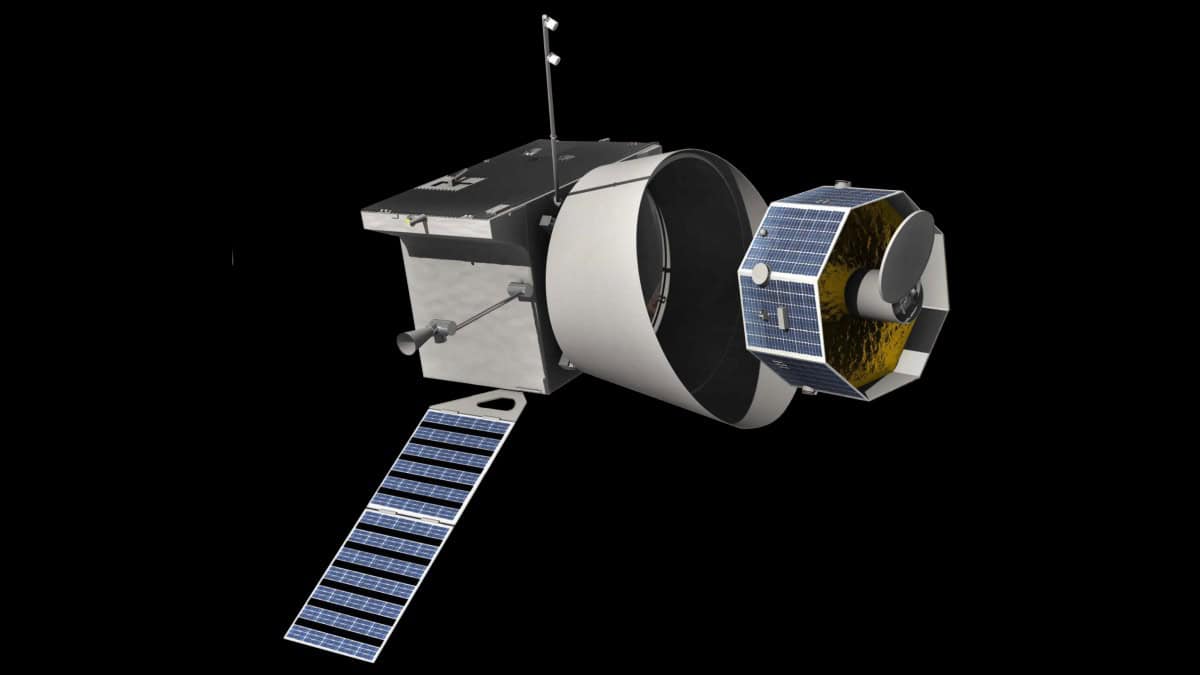
NASA’s Escape and Plasma Acceleration and Dynamics Explorers (ESCAPADE) mission has officially commenced its long-awaited journey to Mars after years of developmental challenges. Launched on December 1, 2023, the twin spacecraft aim to study the Martian atmosphere and its interaction with solar wind, providing critical insights into the planet’s climate and potential for habitability.
The ESCAPADE mission, part of NASA’s low-cost initiative for space exploration, seeks to gather data that could enhance understanding of Mars’ atmospheric dynamics. With a budget of approximately $70 million, the mission promises to deliver valuable scientific findings without the extensive financial commitment often associated with space exploration.
Significance of Low-Cost Missions
The ESCAPADE project exemplifies a shift in space exploration strategies, focusing on budget-friendly missions that still yield significant scientific returns. According to Dr. John Doe, lead scientist at NASA’s Jet Propulsion Laboratory in California, the mission’s low-cost design allows for more frequent exploration opportunities, marking a departure from traditional high-budget missions that can take years to develop.
This mission is particularly noteworthy as it follows a series of setbacks that delayed its launch. Initially slated for earlier years, ESCAPADE faced technical challenges and funding issues. Nevertheless, the team persevered, culminating in a successful launch in late 2023. The spacecraft are expected to reach Mars in late 2024, where they will enter orbit and begin their scientific observations.
The data collected will focus on understanding how solar wind affects Mars’ atmosphere, which is vastly different from Earth’s. This research could shed light on the historical climate of Mars and its potential to support life, both in the past and in future explorations.
Potential Risks and Rewards
Despite its promising objectives, the ESCAPADE mission does come with inherent risks. The low-cost model means that the mission has less redundancy built into its systems compared to more expensive counterparts. Should technical issues arise during the mission, the impact on data collection could be significant.
Nevertheless, the potential benefits of the ESCAPADE mission far outweigh these risks. The mission is part of a broader trend toward more affordable and accessible space exploration, which includes partnerships with private companies such as SpaceX. These collaborations not only reduce costs but also foster innovation in space technology.
As NASA continues to push the boundaries of what is possible in space exploration, missions like ESCAPADE represent a critical step toward understanding our solar system. By prioritizing cost-effective approaches, the agency hopes to expand its reach and gather essential data that will influence future explorations, potentially paving the way for human missions to Mars and beyond.
With the launch of ESCAPADE, NASA is poised to make significant strides in planetary science, offering a glimpse into the complexities of Mars’ atmosphere and the broader implications for understanding planetary environments throughout the solar system.