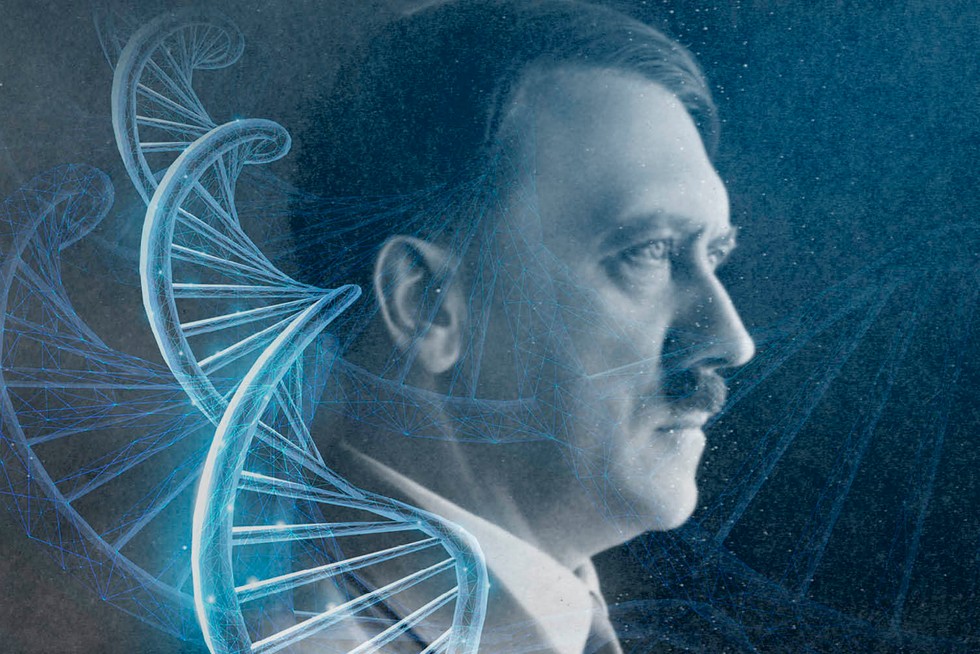
A recent documentary has unveiled groundbreaking findings from an analysis of Adolf Hitler’s DNA, revealing significant historical and genetic insights. The documentary, titled Hitler’s DNA: Blueprint of a Dictator, produced by Blink Films and airing on Channel 4, presents the results of a unique analysis conducted on a bloodstained fabric from the sofa where Hitler died on April 30, 1945.
The sample was taken by Lieutenant Colonel Roswell P. Rosengren, who retrieved a piece of the sofa from Hitler’s Berlin bunker shortly after the dictator’s suicide. After being preserved for decades, the fabric was ultimately donated to the Gettysburg Museum of History, which offered it for DNA testing. The documentary’s lead investigators, historian Alex J Kay and geneticist Turi King, played pivotal roles in this extensive research.
Confirming the Source of the Sample
The first challenge was verifying that the blood sample indeed belonged to Hitler. This required comprehensive forensic analysis, combining DNA evidence with historical context. The sample’s provenance was supported by a signed affidavit from Rosengren’s son, confirming its authenticity.
To ascertain the DNA’s origin, researchers sought comparisons with relatives of Hitler. Although he had no children, previous studies had identified distant male-line relatives, which allowed for analysis of the Y-chromosome. The results confirmed a match with a rare Y-chromosome type, significantly reducing the likelihood of another male relative being the source of the blood. Thus, it was established that the DNA belonged to Hitler himself.
Debunking Myths of Ancestry
One of the major revelations from this analysis was the confirmation that Hitler did not have Jewish ancestry, a rumor that had circulated for decades. The scientific testing firmly established that there was no truth to this claim, aligning with the beliefs of serious historians.
Furthermore, the documentary took an ambitious step by sequencing Hitler’s entire genome, placing him among numerous historical figures whose DNA has been analyzed. This opened new discussions about his health and potential genetic conditions, particularly in light of his infamous behavior and ideology.
The analysis revealed that Hitler exhibited a genetic mutation associated with Kallmann syndrome, a condition that can affect testosterone production and reproductive function. This finding suggests a possible link between his genetic makeup and aspects of his personal life, particularly regarding his relationships and perceived sexual development.
Genetics and Historical Context
The implications of these findings are profound. Historical accounts indicate that Hitler displayed signs of sexual dysfunction and a repressed sexual life, which may have stemmed from his physical abnormalities identified during an examination in 1923. Such insights might help explain his intense focus on politics and the absence of a private life, contrasting sharply with other prominent Nazi leaders who maintained family lives.
While the genetic analysis provided compelling information, it is essential to recognize the broader context of Hitler’s life. Factors such as his traumatic childhood and the loss of family members played a crucial role in shaping his character. The interplay between genetics and environment underscores the complexity of understanding such a notorious historical figure.
This analysis also revealed that Hitler scored in the top 1 percent for polygenic risks related to conditions such as schizophrenia, autism, and bipolar disorder. While these scores do not diagnose any of these conditions, their significance lies in their rarity, raising questions about the influence of genetics on his psychological profile.
In conclusion, the investigation into Hitler’s DNA offers a remarkable opportunity to deepen our understanding of his life and actions. The findings from this documentary provide historians with a unique piece of the puzzle, highlighting how genetics can intersect with historical narratives. While genetic makeup alone cannot explain the atrocities committed under his regime, it adds a new dimension to the ongoing discourse surrounding one of history’s most infamous figures.