A team of international researchers has made significant strides in forecasting solar storms by monitoring cosmic rays, using data from the BepiColombo mission. Led by Gaku Kinoshita at the University of Tokyo, this innovative approach could enhance the accuracy of space weather predictions associated with coronal mass ejections (CMEs), which are large bursts of plasma released from the Sun’s atmosphere.
CMEs can travel through interplanetary space and interact with Earth’s magnetic field, leading to geomagnetic storms that produce stunning auroras in polar regions. These storms can also pose risks to electronics on satellites and spacecraft, and in extreme cases, they may disrupt electrical grids on Earth. Understanding and predicting the path and strength of CME plasma is crucial for minimizing potential damage to vulnerable systems.
Kinoshita’s team has identified cosmic rays—energetic charged particles that permeate the solar system—as a largely untapped resource for improving CME forecasts. When a CME passes through interplanetary space, it can temporarily reduce the intensity of cosmic rays in its vicinity, a phenomenon known as the Forbush decrease effect. This effect can be detected with relatively simple particle detectors, providing insights into the properties of the passing CME.
While cosmic rays are easier to detect than previously thought, scientists had not observed Forbush decreases simultaneously at various distances from the Sun. This gap left them uncertain about how the distance from the Sun affects the severity of these decreases. By employing data from the BepiColombo mission, which is set to begin orbiting Mercury in November 2026, the team explored this spatial relationship.
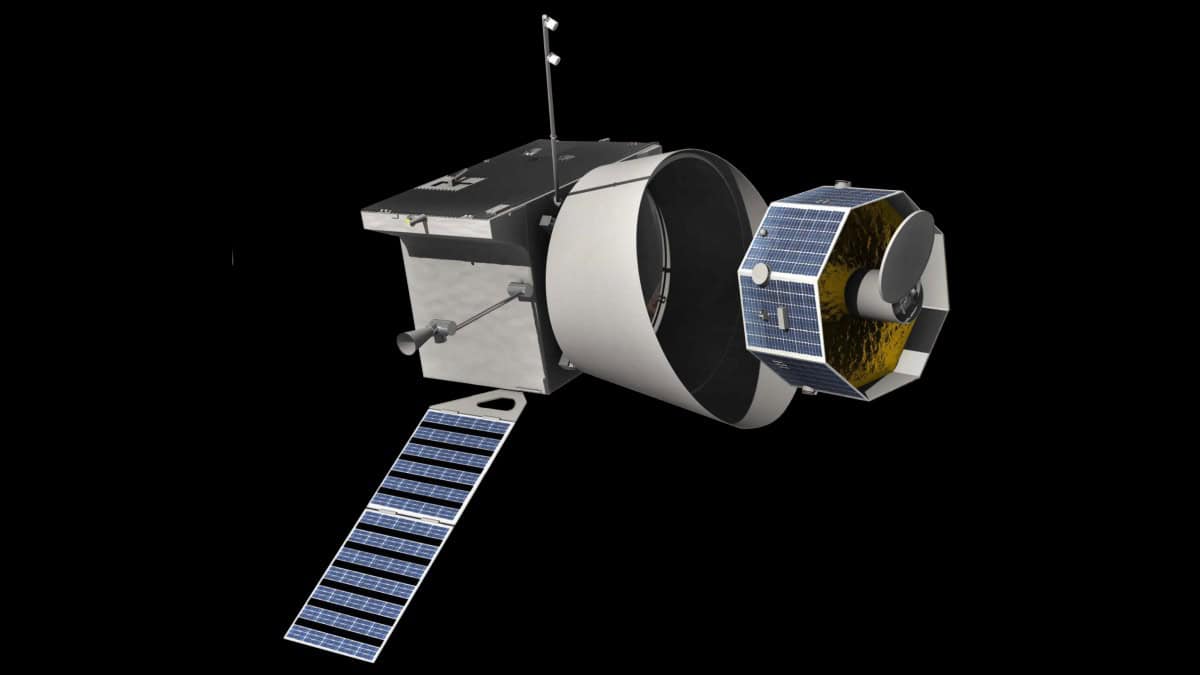
Although BepiColombo’s primary mission is to study Mercury’s surface and magnetosphere, it also carries instruments capable of monitoring cosmic rays and solar plasma. Kinoshita’s team developed a method to observe Forbush decreases using a non-scientific radiation monitor onboard the spacecraft. They combined these measurements with data from specialized missions, including the European Space Agency’s Solar Orbiter, which is currently studying the inner heliosphere.
The combination of data allowed researchers to build a detailed profile of an interplanetary coronal mass ejection that occurred in March 2022. Their findings confirmed a clear relationship between the Forbush decrease effect and the distance from the Sun. As the CME evolved, the depth and gradient of its associated cosmic-ray decrease changed, reflecting its characteristics.
With this method now established, Kinoshita’s team believes it can be applied to radiation monitors on other missions throughout the solar system. This advancement could lead to a more comprehensive understanding of how ICMEs affect cosmic rays and, consequently, improve forecasts of disturbances such as geomagnetic storms.
Kinoshita emphasizes the potential impact of their research: “An improved understanding of ICME propagation processes could contribute to better forecasting of disturbances such as geomagnetic storms, leading to further advances in space weather prediction.” By refining models of solar plasma behavior as soon as a CME erupts, astronomers aim to enhance preparedness for potentially damaging events.
The findings of this research are detailed in The Astrophysical Journal, marking a significant step forward in the field of space weather prediction. As scientists continue to explore the complex interactions between solar phenomena and cosmic rays, the potential for improved safety and reliability of space-based technologies grows.