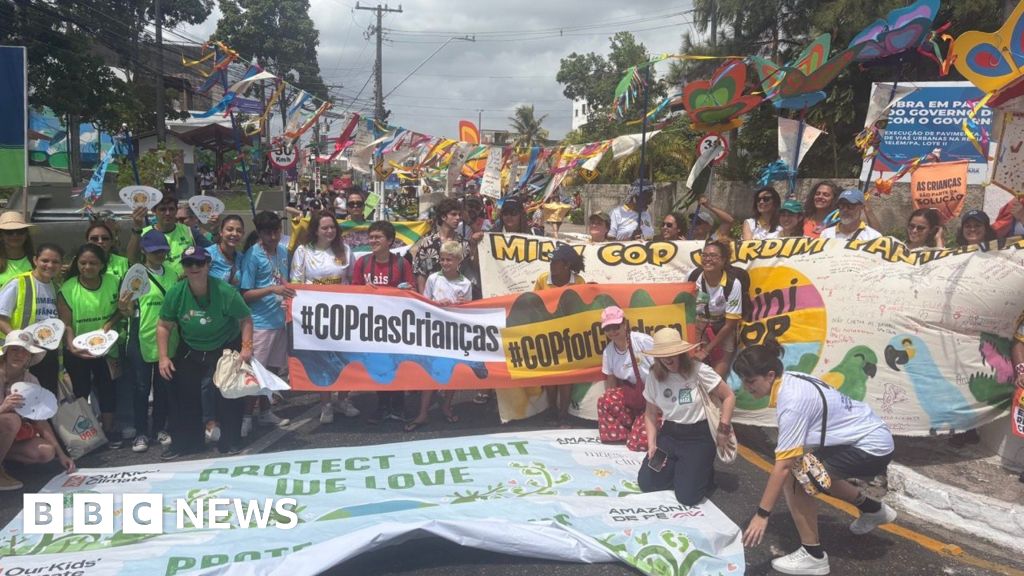
Thousands of climate protesters gathered in Belem, Brazil, on March 15, 2024, bringing their demands directly to the gates of the COP30 climate summit. This demonstration marks a significant return to public protests outside UN climate talks, which had been restricted in previous years. The attendees chanted slogans such as “free the Amazon,” while carrying three large coffins labeled Oil, Coal, and Gas, flanked by figures representing grim reapers.
The event showcased a vibrant display of activism, with indigenous groups presenting signs stating, “the answer is us,” alongside an inflatable elephant and anaconda that wove through the crowd. The demonstrators highlighted the urgent need for action against fossil fuel use, as many noted the ongoing impacts of climate change on their communities.
Voices of the Protest
Brianna Fruean, a climate activist from Samoa, expressed her concerns, stating, “Fossil fuels are still being burned. We know all too well what it’s like to live on the frontline of climate change.” Her remarks underscore the vulnerability of low-lying island nations to rising sea levels and extreme weather events.
Another activist, Ilan, from the non-governmental organization 350, emphasized the need for justice in climate action. “We are here after so many COPS, marching for justice, for the end of fossil fuels,” he said. The turnout included indigenous communities, Brazilian youth groups, and various activist organizations, all calling for more significant protections for the Amazon rainforest.
Many protesters carried signs advocating for “demarcation now,” seeking legal ownership of territories for indigenous groups who play a critical role in safeguarding biodiversity and forest ecosystems. Experts recognize that these communities are vital to protecting the Amazon, which has faced extensive deforestation and environmental degradation.
Continuing Negotiations Amid Protests
This demonstration follows a tense incident at the summit on March 12, when protesters breached security lines, resulting in minor injuries to two security staff members and some damage to the venue. Despite these challenges, negotiations at COP30 have continued, with nearly 200 countries in attendance striving to make headway in addressing climate change. However, reports indicate that little progress was made during the initial week of discussions.
As the talks progress, some delegations are advocating for a cohesive strategy to fulfil past commitments to reduce reliance on fossil fuels. Hosting the summit, President Luis Ignacio Lula da Silva of Brazil has positioned Belem as a focal point for global attention on the Amazon and its indigenous peoples. Yet, controversy surrounds the talks as shortly before their commencement, Lula’s government authorized the Brazilian state oil company to explore for oil at the mouth of the Amazon.
The juxtaposition of ongoing protests and high-level negotiations illustrates the complex dynamics of climate action, reflecting a growing demand from activists for substantive change in how nations approach environmental policies. As COP30 continues, the voices of those on the front lines of climate change are unlikely to be silenced.