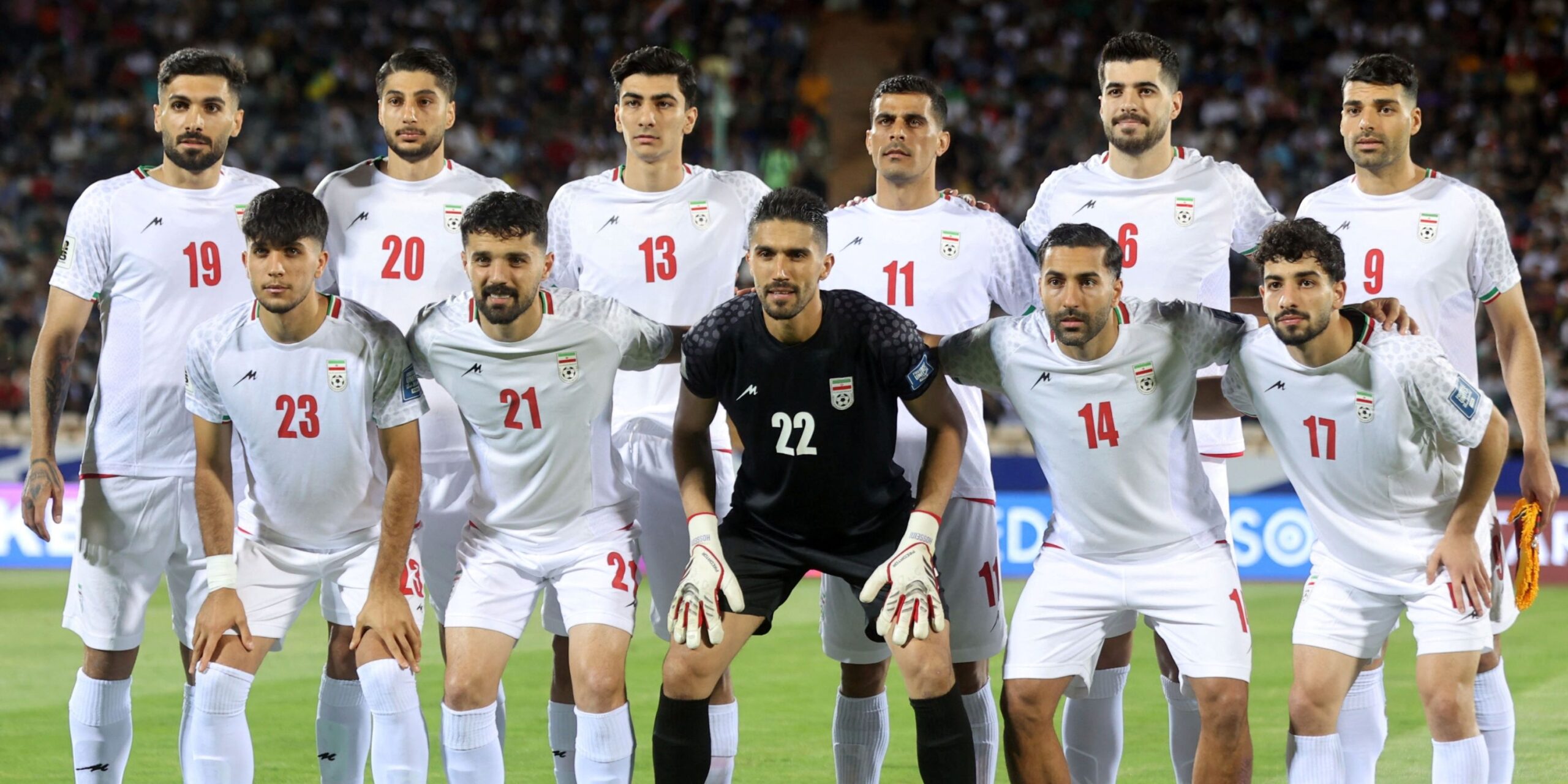
Iran’s participation in the 2026 World Cup is now uncertain following recent military actions taken by the United States against Iran. The president of the Iranian Football Federation, Mehdi Taj, expressed skepticism about the nation’s ability to compete in the tournament during an interview with Iranian public television.
The situation escalated this week with the U.S. launching what it termed “major combat operations” against Iranian territories. Taj stated, “With what happened today and with that attack by the United States, it is unlikely that we can look forward to the World Cup, but the sports chiefs are the ones who must decide on that.” This sentiment reflects ongoing tension and the potential impact on international sporting events.
Iran is set to face three opponents during the group stage of the World Cup, which begins in June 2026. The matches are scheduled as follows: against New Zealand on June 15 in Los Angeles, Belgium on June 21 in the same city, and Egypt on June 26 in Seattle. Despite these scheduled fixtures, the nation’s participation is now in jeopardy, especially considering that key officials, including Taj, were unable to attend the draw for the group stage in late 2025 due to visa restrictions imposed by the U.S. travel ban.
The domestic football league in Iran has also been suspended until further notice, further complicating the situation for players and officials.
Potential Replacements for Iran
FIFA’s regulations stipulate that if a team withdraws from the tournament, it can be replaced by either the direct runner-up from the relevant qualifying playoff or the highest-ranked non-qualified team from the same confederation. In this scenario, the United Arab Emirates (UAE) may emerge as a potential replacement. The UAE finished as the highest-ranked non-qualifier in the Asian qualification process, narrowly missing out on a playoff against Iraq after losing 3-2 on aggregate.
Another possibility could see Iraq directly taking over Iran’s spot in Group G, with the UAE then entering the intercontinental playoff as a pathway to the tournament. Mattias Grafstrom, FIFA’s general secretary, noted that the organization is closely monitoring the situation to ensure a safe World Cup for all participating nations.
As the situation develops, the impact of geopolitical tensions on international sporting events remains a subject of concern. The uncertainty surrounding Iran’s participation raises questions about the broader implications for the World Cup and the athletes involved.