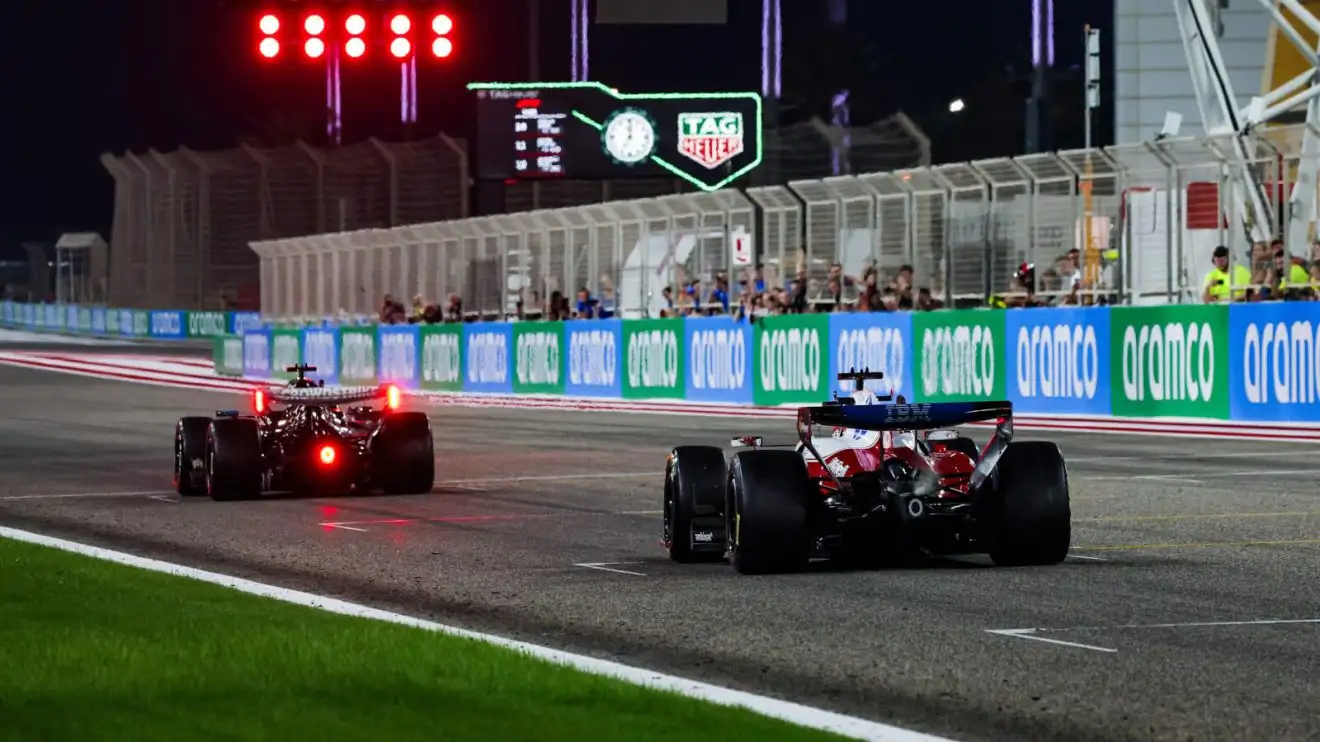
Mercedes has made significant improvements in its race starts during the final testing session in Bahrain, although Ferrari continues to set the standard with its impressive launches. According to driver Kimi Antonelli, the performance gap on the starting grid remains evident, and while Mercedes is progressing, more work is required before the season-opening Australian Grand Prix.
Discussions surrounding the new power units have dominated the pre-season, particularly regarding compression ratios. A vote set for August 1, 2023 may introduce changes in how these ratios are measured. In response to concerns over race starts, the FIA has implemented a pre-warning system during the final two days of testing, which was followed closely by drivers. Despite these adjustments, Ferrari emerged as the clear leader in launch performance.
The Ferrari SF-26, potentially equipped with a smaller turbo as suggested by George Russell, demonstrated exceptional speed off the line. In practice sessions, the Ferrari drivers consistently overtook Russell before he reached Turn 1, even when he started from pole position with Lewis Hamilton starting in 11th place. Although Russell eventually held his position on Friday, the dominance of Ferrari’s launch capabilities was unmistakable.
Kimi Antonelli acknowledged Mercedes’ progress, stating, “The Ferrari looked very strong, the power unit very strong on starts. But we made a lot of changes, and at the end, the start felt a lot stronger.” Despite this optimism, he noted the complexity of perfecting the start procedure, emphasizing the need for further refinement.
Another team showcasing improved launch performance was the Ferrari-powered Haas. Drivers Esteban Ocon and Oliver Bearman experienced better starts, though they still lagged behind Ferrari. Ocon indicated that Haas had faced challenges early in the year, struggling to find the right revs for optimal launches. He expressed confidence in the team’s progress, stating, “Now I think we are in a much better place… There are some things that we can still improve.”
The pre-season has highlighted ongoing challenges for drivers as they adapt to the new F1 2026 power units, particularly related to launching. The removal of the MGU-H, which previously mitigated turbo lag, has made achieving the ideal start configuration more complex. Consequently, drivers are experiencing delays in preparing their cars for launches, a situation that is being closely monitored as teams head towards the 2026 season.
As the teams prepare for the Australian Grand Prix, the competition is intensifying. The performance during these final tests in Bahrain may set the tone for the upcoming season, with teams eager to refine their strategies and improve their race starts.
For fans eager to stay updated, exclusive insights from the F1 paddock are available through various channels, including WhatsApp and dedicated YouTube features from accredited journalists. The anticipation for the 2026 Formula 1 season continues to build, with each team looking to make its mark on the track.