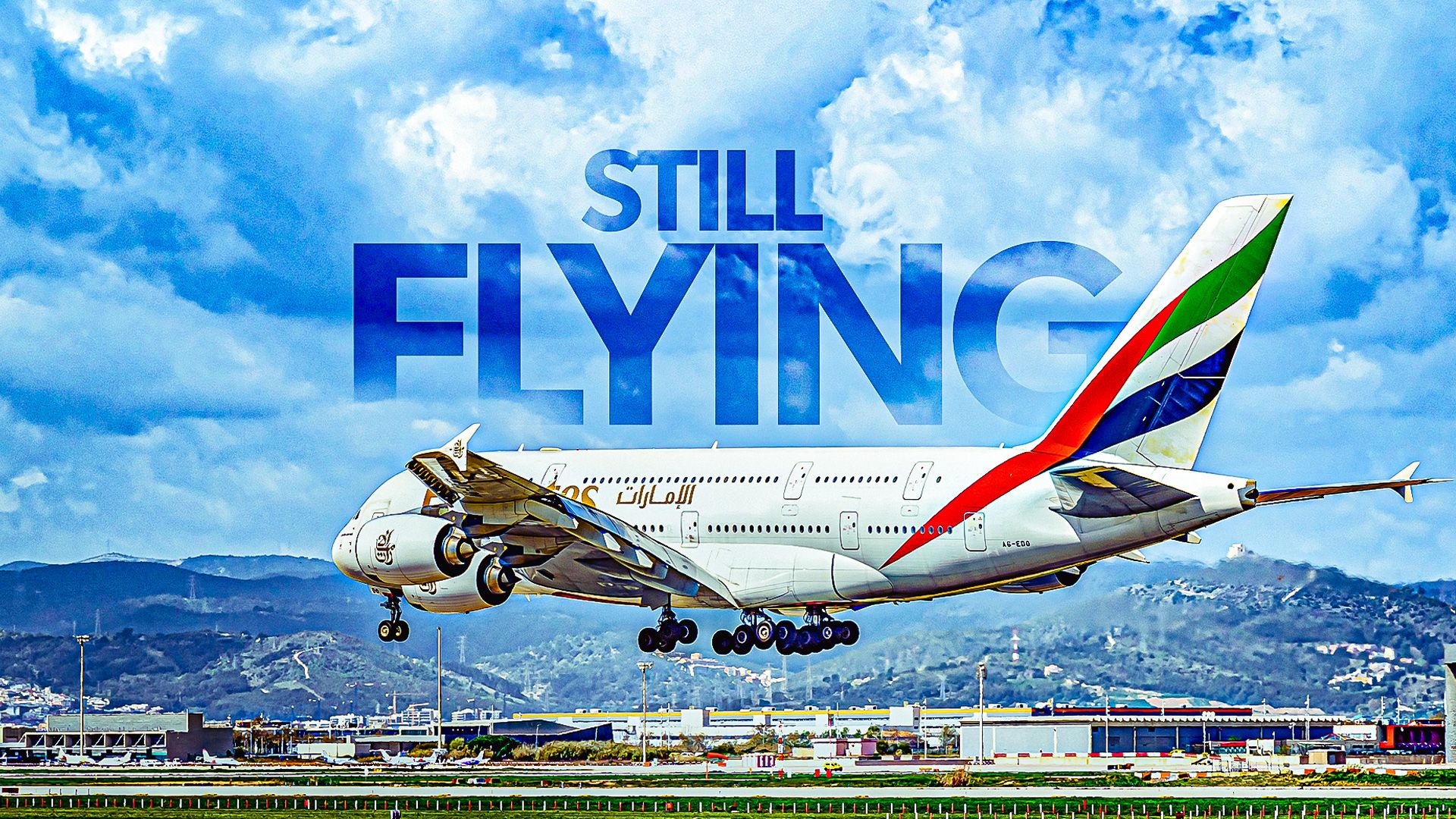
The Airbus A380 has made a notable comeback, with 159 active aircraft operating worldwide as of February 2026. This resurgence reflects the increasing demand for global air travel, challenging previous doubts about the viability of the superjumbo. Analysts and aviation enthusiasts are keenly tracking the active fleet, as it illustrates the industry’s continued dependence on the hub-and-spoke model, offering insights into the recovery of international long-haul capacity.
As of early 2026, the A380 is in operation with 11 different airlines, ranging from industry giants like Emirates to smaller carriers such as All Nippon Airways (ANA). Despite the cessation of A380 production in 2021, many of the active airframes are relatively young, with some, like ANA’s “Flying Honu” fleet, averaging just under 7 years of age. Emirates also boasts younger units, many under 8 years old, indicating that the A380 will likely remain a key asset for the next decade or more.
Current Utilization and Trends
According to data from Cirium, these 159 active A380s are being deployed across 63 airports globally, with a significant concentration in Dubai, which serves as a primary hub for the superjumbo. From January to August 2026, Dubai is projected to handle over 20,225 one-way A380 departures. Other major hubs include London Heathrow, Singapore Changi, and Sydney, where the aircraft’s high capacity proves essential for managing restricted takeoff and landing slots.
Carriers are increasingly focusing the A380 on high-density routes, utilizing its large seating capacity of between 450 to 600+ seats per flight. Airlines like Etihad and Qatar Airways operate smaller sub-fleets of seven to ten aircraft, strategically deploying them on routes with the highest premium demand. This operational strategy has resulted in a smaller global fleet compared to its peak in 2019, yet it is arguably more efficiently utilized.
The fluctuating number of active A380s can be attributed to various factors, including maintenance schedules and the dynamics of airport infrastructure. Heavy maintenance checks can ground an aircraft for extended periods, while the hub-and-spoke strategy in regions such as the Middle East and Asia-Pacific emphasizes the necessity of the A380’s high-capacity design.
Strategic Decisions and Market Adaptation
Emirates, the largest A380 operator, has announced plans to keep 110 units active until the end of 2026, primarily due to delays in deliveries of the Boeing 777X. Other airlines, such as British Airways and Lufthansa, have recognized the A380’s ability to maximize passenger throughput at congested airports like London Heathrow and Munich. The aircraft’s high revenue potential from first-class suites and onboard amenities makes it a profitable choice despite higher fuel costs compared to twin-engine jets.
For instance, Lufthansa recently reactivated its A380 fleet to serve high-demand routes to the United States, while Qantas is utilizing the aircraft to restore capacity on its flagship “Kangaroo Route” to London. These examples illustrate a shift in perception, with the A380 now regarded as a critical asset rather than a financial burden.
Sir Tim Clark, President of Emirates, has been a vocal proponent of the A380, asserting the necessity for premium seating on routes into key destinations. In a 2026 interview, he stated, “Every time we fly into Paris or London or Sydney, we’ve got no seats, and our spill rate is so high.” Emirates plans to keep the A380 operational until 2041, with significant investments in retrofitting the fleet to enhance passenger experience.
The A380’s unique offerings, including onboard showers and luxury suites, help maintain its appeal in an increasingly competitive market. As long as airports remain congested and travelers seek premium experiences, the A380 will continue to serve a vital role in international air travel.
Despite its resurgence, the A380 faces challenges. The primary alternatives are modern twin-engine widebodies like the Boeing 777-9 and Airbus A350-1000, which offer better fuel efficiency. While the A380 can carry over 500 passengers, these newer models provide a more practical balance of capacity and operational costs.
Nevertheless, the A380 remains essential at slot-constrained airports, where its ability to accommodate many passengers in a single flight is invaluable. The aircraft’s four-engine design offers a safety advantage, allowing for a controlled flight in the event of an engine failure, which is critical for long-haul operations.
Challenges Ahead for the A380
The renewed interest in the A380 also comes with significant operational risks, including rising maintenance costs and a fractured supply chain. As an out-of-production aircraft, sourcing parts is becoming increasingly expensive and complex. Major maintenance checks can require substantial labor hours, and the aircraft has faced numerous airworthiness directives since 2020.
Furthermore, the A380’s operational limitations are pronounced. Its large wingspan necessitates specific airport infrastructure, which restricts its deployment to a limited number of global hubs. This inflexibility can pose challenges during economic downturns, as airlines may find it difficult to adjust to fluctuating demand.
Airlines are adopting mixed strategies regarding the A380’s future. While Singapore Airlines has committed to maintaining A380 service to Dubai through 2027, it has also indicated plans to gradually phase out the aircraft. Other airlines are similarly evaluating their long-term strategies, with Korean Air projecting retirement by 2027 and Lufthansa targeting 2030.
Despite the hurdles, the Airbus A380’s current revival signals a strong demand for capacity in the post-pandemic travel landscape. With 159 active aircraft across various carriers, the superjumbo is transitioning from a legacy model to a crucial component of global air travel.
As demand for premium travel experiences continues, the next five to ten years may be pivotal for the A380, offering travelers unique experiences that remain unmatched by smaller aircraft.