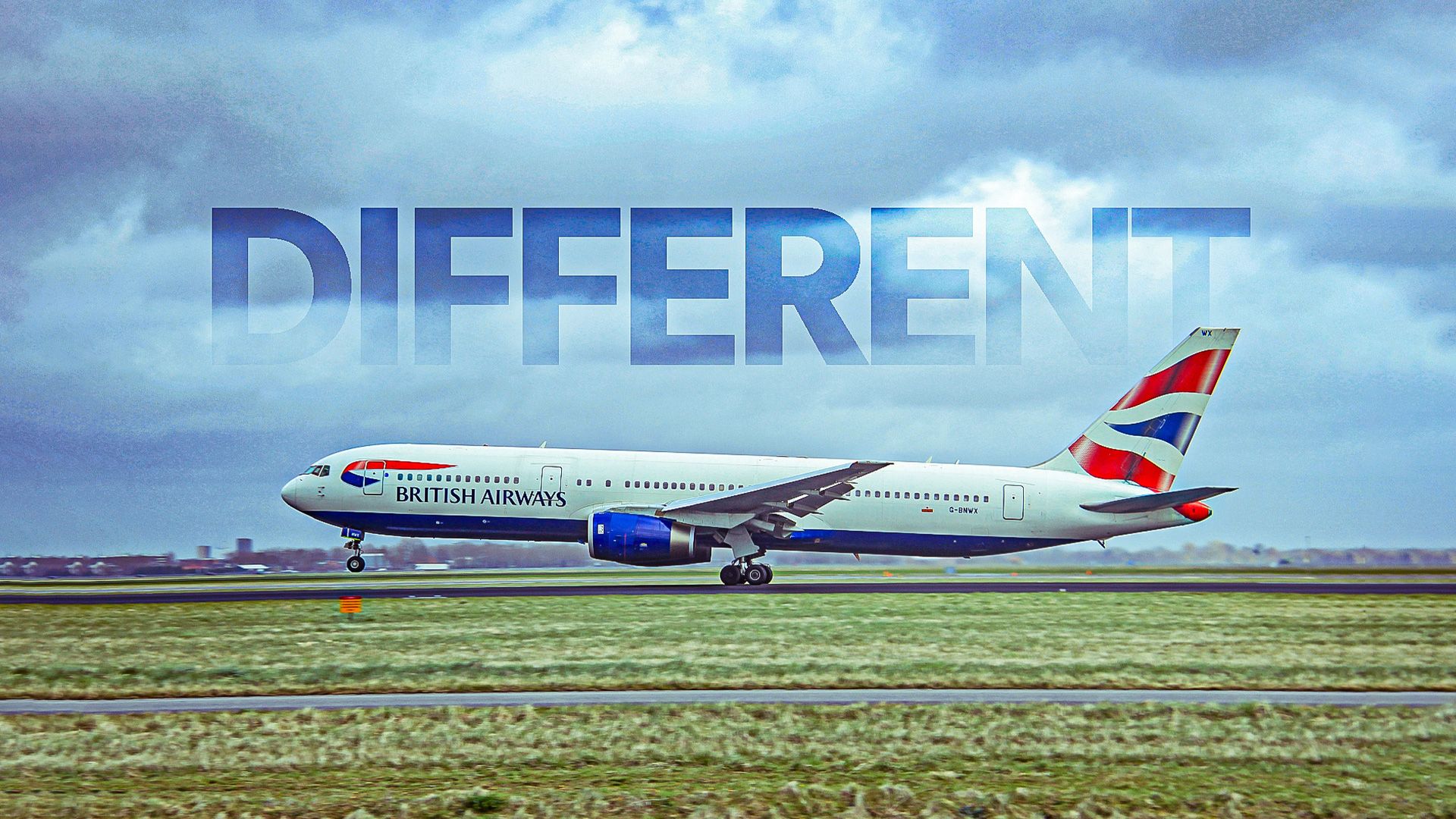
The fleet of Boeing 767-300ERs operated by British Airways (BA) distinguished itself from other 767s through a series of deliberate engineering and operational choices. This unique configuration, which included the use of Rolls-Royce engines instead of the more common General Electric or Pratt & Whitney options, shaped the aircraft’s role within the airline’s broader strategy. Over nearly three decades, BA’s 767s adapted to various routes, showcasing the aircraft’s versatility and the airline’s innovative approach.
The Development of the Boeing 767
The Boeing 767 was developed in response to the growing demand for efficient widebody aircraft during the late 1970s. Designed to bridge the gap between smaller narrowbody models like the Boeing 737 and larger aircraft such as the Boeing 747, the 767 combined twin-engine efficiency with intercontinental range. The aircraft first took to the skies in 1981, with the initial 767-200 entering service in September 1982 with United Airlines. The extended-range model, the 767-300ER, was launched in 1988 with American Airlines.
This aircraft featured an advanced flight deck, allowing operation by a two-pilot crew without the need for a flight engineer. This design paved the way for Boeing’s “glass cockpit” approach, shared with the Boeing 757, enhancing operational flexibility. The 767 evolved through various variants, with the 767-300ER becoming particularly successful, allowing airlines to efficiently operate long-haul routes.
British Airways and Its Boeing 767-300ER Fleet
British Airways introduced the 767-300ER into its fleet in 1990, quickly integrating it into its medium and long-haul route strategy. BA eventually operated 28 of these aircraft, making it one of the largest operators of the 767 in Europe. Initially, these planes were primarily deployed on long-haul services, especially transatlantic routes from London Heathrow to numerous North American destinations. The 767 provided the necessary range and payload capacity while being more fuel-efficient than the Boeing 747, which was then a significant part of BA’s fleet.
As newer long-haul aircraft such as the Boeing 777 and Boeing 787 were introduced, BA adapted its use of the 767, redeploying many of the aircraft onto shorter European and domestic routes. This flexibility extended the aircraft’s operational life within BA’s fleet and highlighted the adaptability of the 767 design across different missions.
A significant aspect of BA’s 767-300ER fleet was the choice of engines. British Airways opted for the Rolls-Royce RB211 engines, which produced approximately 59,000 to 60,500 pounds of thrust. This choice set BA apart from the majority of other operators, who typically selected General Electric or Pratt & Whitney engines. The decision was based on BA’s existing fleet strategy, as the airline already operated a number of RB211-powered Boeing 747-400s and Boeing 757s.
Standardizing on Rolls-Royce engines simplified maintenance and reduced operational complexities. While the RB211 engines were heavier and required structural reinforcements on the aircraft, this unique configuration ultimately provided BA with long-term operational benefits.
The structural modifications included strengthened pylons and enhanced inspection regimes to address the increased stresses associated with the heavier engines. This meant that BA’s 767s were not merely standard aircraft fitted with different engines but represented a distinct sub-variant of the 767 series.
Despite the advantages, the RB211-powered 767s were relatively rare within the global fleet. Out of over 650 Boeing 767-300s and 300ERs delivered worldwide, only a small number featured Rolls-Royce engines outside of British Airways. This rarity limited the appeal of the RB211 option for other airlines, which preferred the more widely supported GE and Pratt & Whitney engines.
British Airways retired its 767-300ER fleet in 2018 after nearly three decades of service. Throughout its time in operation, the aircraft evolved from a cutting-edge long-haul airliner to a versatile workhorse, adept at handling a wide variety of routes. The combination of RB211 engines, unique structural characteristics, and a flexible deployment strategy reinforced British Airways’ distinctive approach to fleet management.
Today, BA’s 767-300ERs are remembered as a significant part of the airline’s history, showcasing how strategic and engineering decisions can create a unique identity within a widely used aircraft type. Their operational flexibility allowed British Airways to optimize capacity on routes where larger jets were less economical, leaving a lasting impression on both the airline and the aviation industry.