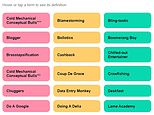
The language of the early 2000s has resurfaced in a humorous glossary compiled by the language learning app Preply. The glossary, produced by the BBC, highlights popular slang from 2002, revealing both terms that have stuck around and those that have become outdated. From “bling-tastic” to “blogger,” the list showcases how language evolves over time.
According to Anna Pyshna, a spokesperson for Preply, slang often reflects societal shifts. “As we have seen time and time again through history, the usage of slang ebbs and flows, contributing to quickly evolving language,” she noted. Pyshna emphasized that cultural developments, technology, and politics shape language trends.
Among the terms that have endured are “blogger,” which saw a staggering 1,245 percent increase in usage from 2002 to 2022. This term has become a staple in everyday vocabulary, largely due to advancements in digital communication. Similarly, the term “babe,” a common term of endearment, experienced a 245 percent rise, while “buzzing,” which denotes excitement, increased by 209 percent over the same period.
Shifts in Slang: From “Bling-tastic” to “Extra”
Many terms from 2002 have evolved or been replaced by new phrases. For instance, “bling-tastic,” used to describe something flashy or extravagant, has transitioned to “extra.” This shift indicates a broader cultural movement toward self-expression rather than mere material displays. Pyshna explained, “Bling-tastic typically boasted about visible luxury, whereas extra encapsulates a cultural movement towards embracing personality and performance.”
The term “minging,” meaning unpleasant or unattractive, has given way to “ick,” a term that has gained traction largely due to the influence of social media and reality television. This evolution reflects a more nuanced approach to communication, particularly in dating contexts. “The rise of ‘ick’ can be attributed largely to social media and reality television,” Pyshna stated.
Another notable transformation is the replacement of “baller” with “boss.” Originally rooted in hip-hop culture, “baller” has faded in popularity, reflecting a societal shift towards empowerment and personal achievement.
Text Communication and Its Impact
In addition to slang evolution, communication styles have also adapted to reflect changing societal norms. A study from Binghamton University reveals that emoji and text abbreviations are valuable tools for conveying emotion in text messages. Researchers found that the use of emoticons and casual language can enhance the meaning of written communication, compensating for the lack of non-verbal cues found in face-to-face interactions.
Professor Celia Klin, lead author of the study, noted the importance of these “textisms,” stating, “In contrast with face-to-face conversation, texters can’t rely on extra-linguistic cues such as tone of voice and pauses.” The study suggests that punctuation, such as the use of full stops, can negatively affect the perceived sincerity of a message. Messages ending with a period may come across as less heartfelt compared to those without.
As the landscape of language continues to evolve, the exploration of past slang provides a fascinating glimpse into cultural history. Those interested in linguistic trends can reflect on how terms from 2002 resonate today, acknowledging the dynamic nature of communication in an ever-changing world.