A research team from Australia has proposed an innovative framework for potential communication with extraterrestrial life, suggesting that mathematics could serve as a universal language. This groundbreaking idea stems from studies of honeybees, whose unique communication methods may provide insights into how different species, including humans and potential alien civilizations, can understand one another.
The vast distances of interstellar space present significant challenges for communication. With the nearest star, Proxima Centauri, located approximately 4.4 light-years away, transmitting a message and receiving a response could take at least ten years. This makes the prospect of learning an alien language impractical. Instead, researchers advocate for the development of a universal language rooted in mathematical concepts, which have shown commonalities between humans and bees.
Dr. Adrian Dyer, a co-author of the study from Monash University, emphasized the evolutionary distance between humans and bees, stating, “Because bees and humans are separated by about 600 million years in evolutionary time, we developed very different physiology, brain size, culture.” Despite these differences, both species demonstrate a fundamental understanding of mathematics, which could bridge the communication gap with extraterrestrial beings.
Recent experiments have highlighted the mathematical capabilities of bees. In these studies, bees were rewarded with sugar water for solving mathematical problems, revealing their ability to add and subtract, categorize quantities, and even grasp the concept of zero. Remarkably, bees were also able to connect abstract symbols with numerical values, akin to how humans learn numeral systems.
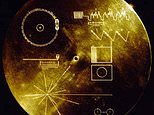
This evidence supports the notion that mathematics may indeed be a universal language. Historical attempts to communicate with extraterrestrial life have included the Golden Records launched aboard the Voyager 1 and Voyager 2 spacecraft in 1977. These records contained mathematical and physical representations intended to convey fundamental concepts to any potential extraterrestrial listeners. Additionally, the Arecibo radio message sent in 1974 utilized binary code to represent numbers and atomic structures.
Despite these efforts, there has been uncertainty about whether extraterrestrial civilizations would share similar mathematical understandings. However, Dr. Dyer’s research posits that if bees can comprehend mathematics, then it is plausible that alien species could possess analogous mathematical concepts. This strengthens the argument for using mathematical communication methods in future endeavors to reach out to extraterrestrial intelligence.
Dr. Dyer remarked on the implications of their findings: “When we tested bees on mathematical-type problems, and they could build an understanding to solve the questions we posed, it was very interesting and convincing that an alien species could share similar capabilities.”
Looking ahead, the researchers envision a communication strategy that incorporates basic mathematical principles familiar to humans. Dr. Dyer explained that such a language might begin with binary coded information, evolving over time as communication develops, much like how humans learn language through gradual steps.
The study not only sheds light on potential methods of communicating with alien intelligence but also sparks a broader discussion about the fundamental nature of language and understanding across different forms of life. The possibility that mathematics could unite species, both terrestrial and extraterrestrial, opens new avenues for exploration in the search for life beyond Earth.
As humanity continues to seek answers about our place in the universe, the implications of this research could be profound. With ongoing advancements in astronomy and the study of extraterrestrial environments, the quest for understanding alien civilizations is more relevant than ever.