Lithium-ion companies dominate the latest long-duration energy storage (LDES) rankings, with Tesla claiming the top position. The newly released LDES Leaderboard from Sightline Climate highlights the best suppliers by evaluating their technology, financial stability, deployment capabilities, and overall economics. Notably, Energy Dome emerges as the highest-ranked non-lithium firm, showcasing the competitive landscape of energy storage technologies.
According to research associate Lukas Karapin-Springorum, the leaderboard serves as a valuable resource for identifying companies that are successfully securing LDES tenders. He clarified that while the ranking sheds light on market dynamics, it does not constitute a bankability assessment. Sightline Climate defines LDES as energy storage systems with a duration of eight hours or more, allowing lithium-ion battery energy storage systems (BESS) to qualify if they have deployed projects meeting this criterion.
The top two positions on the leaderboard are held by Tesla and Chint Power. Following them, the leading non-lithium companies include Energy Dome in third place, followed by Highview Power, Hydrostor, ESS Tech Inc, and Sage Geosystems, ranking fourth to seventh overall.
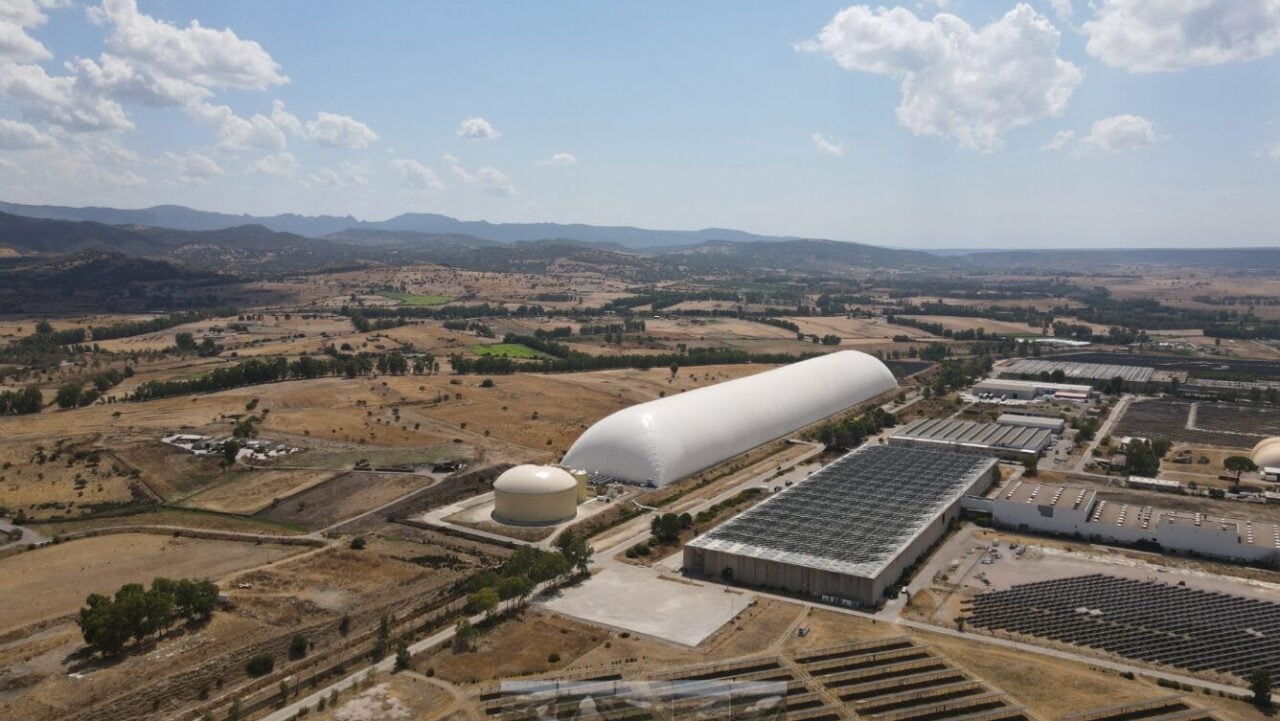
Energy Dome’s unique advantages stem from its two commercial projects that have reached post-Final Investment Decision (FID) status. Karapin-Springorum noted that the company boasts a higher round-trip efficiency than other mechanical storage systems, as well as a competitive capital expenditure (capex) profile. This is particularly attributed to regional cost efficiencies evident in its innovative project in India.
Meanwhile, Highview Power has also made strides with large-scale projects post-FID, backed by strong financing that compensates for its relatively higher capex. The ability of mechanical storage firms to utilize off-the-shelf components significantly contributes to their competitive capex levels, allowing them to match those of lithium-ion systems. This is especially notable for first-of-a-kind projects that have yet to benefit from economies of scale or deployment learnings.
Despite raising less capital and having fewer ‘pipeline’ projects than other technologies, mechanical storage firms have risen in the rankings due to their operational efficiency. In contrast, companies like Enervenue (metal-hydrogen batteries), Form Energy (iron-air batteries), and Invinity Energy Systems (vanadium redox flow batteries) fall outside the top seven due to limited deployments and higher capex.
The placement of ESS Tech Inc among the top five non-lithium firms may come as a surprise, given its listing on the New York Stock Exchange (NYSE). Karapin-Springorum explained that the company performed well due to its historical financial framework and moderate deployment scores from utility pilot projects in the United States.
Looking ahead, the potential for LDES tender awards is significant, with up to 9.3 GW expected to be announced in the first half of 2026 across regions like the UK, New South Wales, and Ontario. Karapin-Springorum emphasized that vendors with successful projects will have a clear path to FID by late 2026 or early 2027. This advancement could enable them to surpass competitors in the leaderboard as construction commences.
The outcome of these tenders will reveal if any vendors can effectively compete with long-duration lithium-ion batteries. Currently, the majority of projects benefiting from pre-2026 LDES policies in New South Wales and California are lithium-ion systems, accounting for 77% of the global capacity expected to be operational by 2030. Should non-lithium technologies fail to secure substantial contracts in 2026, their best strategy may involve focusing on programs in California and Ontario that do not include long-duration lithium-ion options.