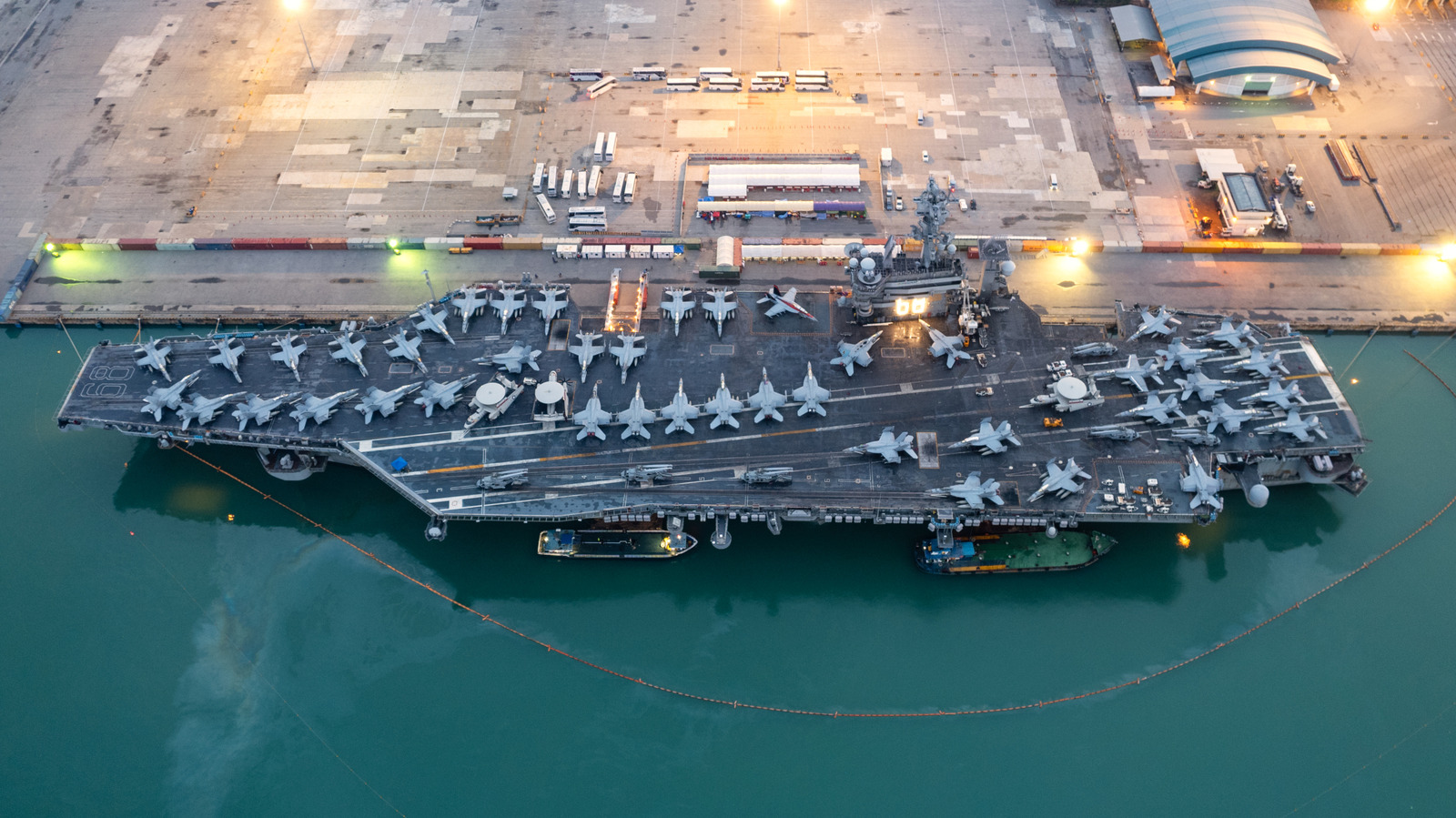
The US Navy is enhancing the safety and precision of aircraft carrier landings through the implementation of a system known as Precision Landing Mode. This sophisticated technology assists pilots in managing the challenging landing process, particularly on the restricted space of an aircraft carrier. While it does not replace the need for skilled human pilots, it significantly reduces the number of adjustments they must make, thus improving the overall safety of naval aviation operations.
The development of this innovative system began in 2015 under the initial name “Magic Carpet,” which stands for Maritime Augmented Guidance with Integrated Controls for Carrier Approach and Recovery Precision Enabling Technologies. After joining fleet operations in 2017, the system faced initial challenges, but subsequent updates refined its performance. By 2021, Precision Landing Mode was integrated into training programs for newly qualified pilots flying models such as the F/A-18E-F Super Hornet.
The landing of military jets on aircraft carriers is a complex task, often requiring pilots to make up to 300 small adjustments during the final moments of descent. According to Ensign Zachary Bell, this level of precision is necessary to ensure a safe landing, as the approach must be executed flawlessly to avoid dire consequences. Precision Landing Mode streamlines this process, reducing the number of necessary adjustments to less than ten, thus allowing pilots to focus on critical aspects of landing.
During carrier landing training in 2021, Capt. Dan Catlin, commanding officer of a Strike Fighter Squadron, reported remarkable improvements in pilot performance. He stated, “This was by far the smoothest evolution, best performance we’ve seen from our students ever — and that’s by an awful lot.” This statement underscores the system’s impact on training outcomes and overall pilot proficiency.
While Precision Landing Mode offers substantial advantages, it is essential to maintain a balance between technological assistance and manual piloting skills. Capt. Catlin emphasized the need for pilots to practice manual landings to remain proficient, especially in the event of system malfunctions. This approach ensures that even experienced aviators can handle unforeseen circumstances effectively.
The introduction of Precision Landing Mode is not limited to the F/A-18E-F Super Hornet. It is now also being implemented in the F-35 Lightning II, further solidifying its role as a key safety standard in naval aviation. The integration of this technology reflects a broader trend in the military to enhance operational effectiveness through advanced systems while preserving human oversight.
In conclusion, as the US Navy continues to evolve its approach to aviation safety, the use of Precision Landing Mode represents a significant advancement. By supporting pilots with technology that aids rather than replaces their expertise, the Navy is setting new standards for safe and effective carrier landings. This dual reliance on human skill and technological support is crucial in ensuring the safety of both personnel and aircraft in the demanding environment of naval operations.