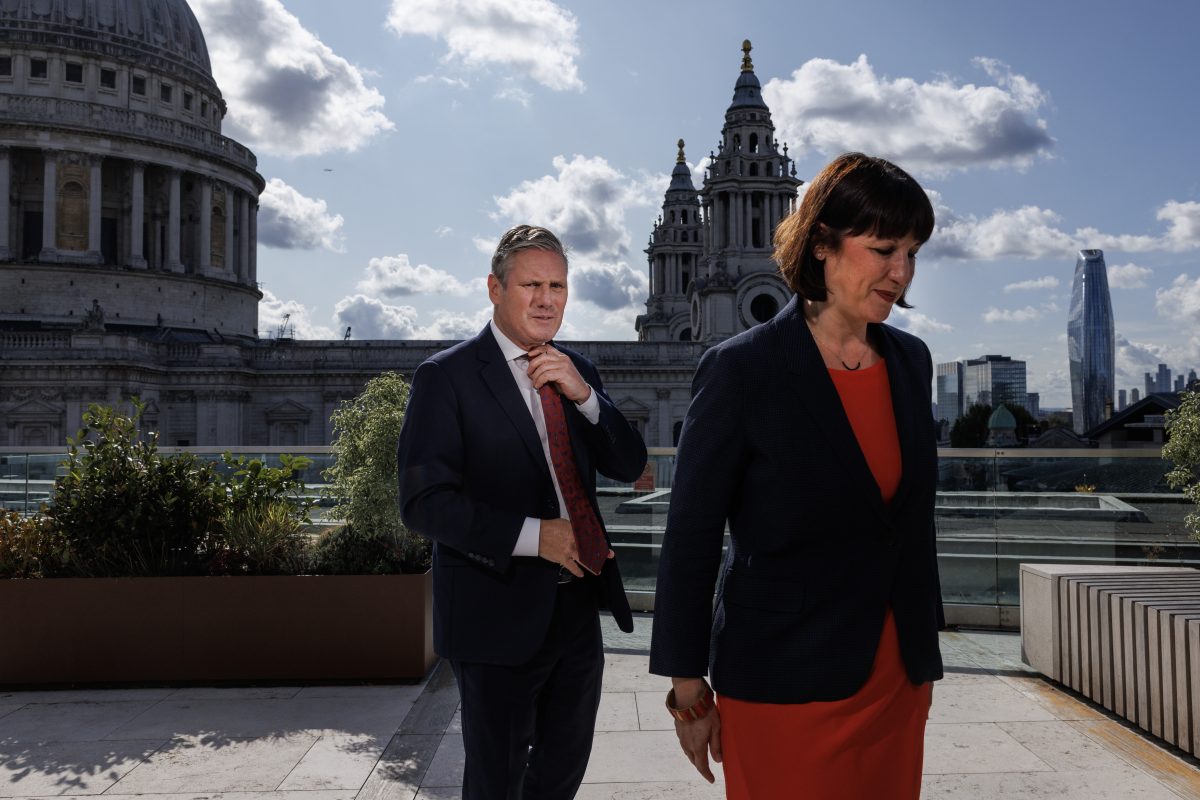
UPDATE: New data reveals that Britain is at the bottom of the G7 for total investment, with public and private spending at just 18.6 percent of GDP for the three months ending in September. This alarming statistic highlights the growing economic challenges faced by the Labour government and its Chancellor, Rachel Reeves, whose policies are now under intense scrutiny.
The latest figures from the Office for National Statistics (ONS) confirm that this trend has persisted since the 1990s, raising urgent questions about the government’s capacity to stimulate growth. Despite promises to inject billions into infrastructure and housing, investment confidence is faltering, primarily due to the government’s frequent policy shifts, tax increases, and rising operational costs for businesses.
In April, the Chancellor’s controversial decisions included a national insurance tax hike and an increase in the national minimum wage, both announced during her inaugural Autumn Budget. As if that wasn’t enough, another living wage increase is set for April, which will further strain businesses already grappling with escalating energy costs and standing charges predicted to rise by 2026.
The economic outlook appears bleak, with economists projecting a mere 1.4 percent growth in 2025, falling to 1 percent in 2026. The Confederation of British Industry (CBI) has expressed cautious optimism, recently adjusting its growth forecast for 2026 to 1.3 percent due to an additional £11 billion in government spending revealed in the Budget. However, this silver lining is overshadowed by a significant downgrade in business investment growth, now projected to decline by 1.1 percentage points compared to earlier estimates.
Shadow Chancellor Sir Mel Stride has voiced concerns about the ONS findings, stating, “Low business investment signals a lack of confidence in the future of the economy. That is precisely what we are seeing.” The implications of these figures are profound, as they suggest a diminishing trust among businesses regarding the economic landscape.
In response to the ONS report, the government asserted its commitment to long-term economic growth, boasting about an increase of over £120 billion in capital investment compared to previous plans and the highest level of public investment in 40 years. They claim that the national wealth fund has generated nearly 12,000 new jobs and leveraged over £5 billion in private investment, all aimed at enhancing living standards across the nation.
As the situation develops, all eyes are on how the Labour government will respond to these disheartening statistics. The pressure mounts for them to restore investor confidence and reinvigorate the UK economy. With key economic indicators trending downward, the coming months will be crucial in determining whether the government can pivot from its current trajectory and achieve the promised economic revitalization.
Stay tuned for further updates on this unfolding economic crisis, as the implications for businesses and workers across the UK are significant and immediate.