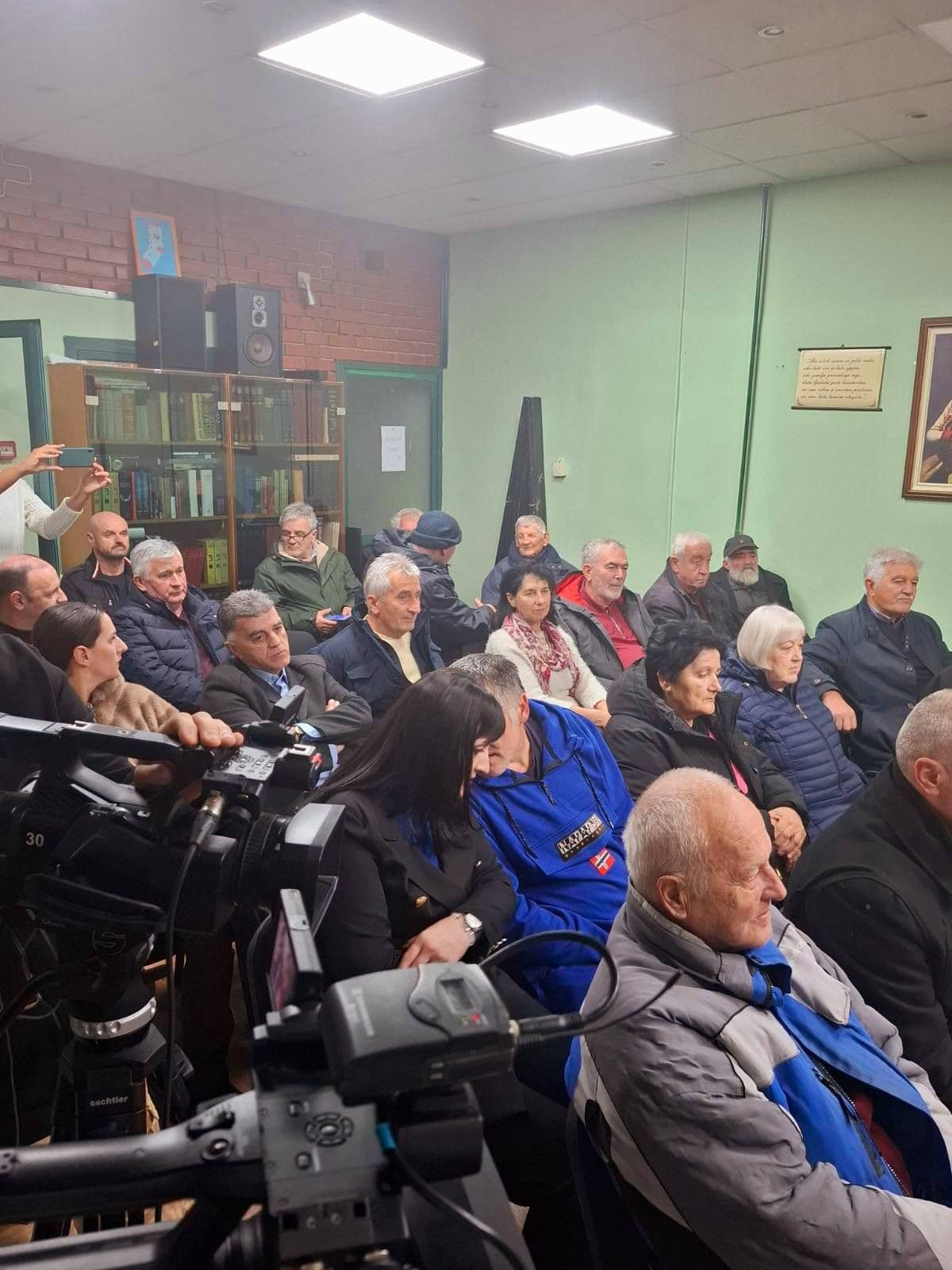
UPDATE: Last night, renowned Croatian author Boris Njavro captivated an audience in Cetinje during an engaging literary evening organized by the National Library and Reading Room “Njegoš”. The event highlighted Njavro’s significant contributions to literature, drawing attention to the powerful themes of love, war, and the human experience in his works.
Cultural expert Saša Božović opened the evening, emphasizing Njavro’s role as the president of the Dubrovnik Writers’ Association and editor of the prestigious annual Literat. Njavro has published two short story collections and two volumes of commentaries that reflect his deep connection to Dubrovnik, a city integral to his literary identity.
In a compelling discussion, Professor Veljko Đukanović focused on Njavro’s collection, “Stories of Love and War and Two Old Ones,” celebrating its unique narrative that spans 159 pages. He described it as a profound literary confession, weaving a complex Mediterranean world where themes of love, war, and human fragility intertwine. “This is a space of memory and wounds, yet also of warmth and human vulnerability,” Đukanović stated.
Fellow writer and president of the Montenegrin Writers’ Association, Adrijan Vuksanović, highlighted the cultural and historical ties between Montenegro and Croatia. He pointed out that events like this foster mutual respect and understanding among nations, underscoring literature’s power to transcend borders and political divides. Vuksanović recalled a poignant moment from 1992, when the people of Cetinje expressed solidarity with Dubrovnik through the heartfelt refrain, “From Lovćen, the spirit calls, forgive us, Dubrovnik.”
Njavro’s stories resonate with themes of irony and pain, offering authentic testimonies of personal experiences during turbulent times. Dr. Domagoj Vidović praised Cetinje as a guardian of language and identity, emphasizing that language is fundamental to cultural preservation.
The evening concluded with an insightful dialogue between Njavro and Božidar Prorocić, where Njavro discussed the truth in literature and the bonds between Croatian and Montenegrin cultures. He noted that his narratives reflect not only truth and pain but also a subtle irony that shapes his unique voice. “The spirit of Cetinje remains strong in the eyes of Dubrovnik,” Njavro remarked, emphasizing the historical connection between the two cities.
The audience actively participated, engaging with questions and sharing reflections, creating a rare and treasured interaction between the author and readers.
In a significant act of cultural exchange, Njavro presented his numerous publications, along with works from Dubrovnik authors, to the audience. In gratitude for his literary contributions, he received valuable monographs about Montenegro, presented by Božović on behalf of the library’s director. This symbolic gesture was described by Božović as a lasting testament to mutual respect and the traditions that bind the two cultures.
This urgent gathering not only celebrated the literary achievements of Boris Njavro but also reinforced the enduring connection between Montenegro and Croatia through the power of storytelling.