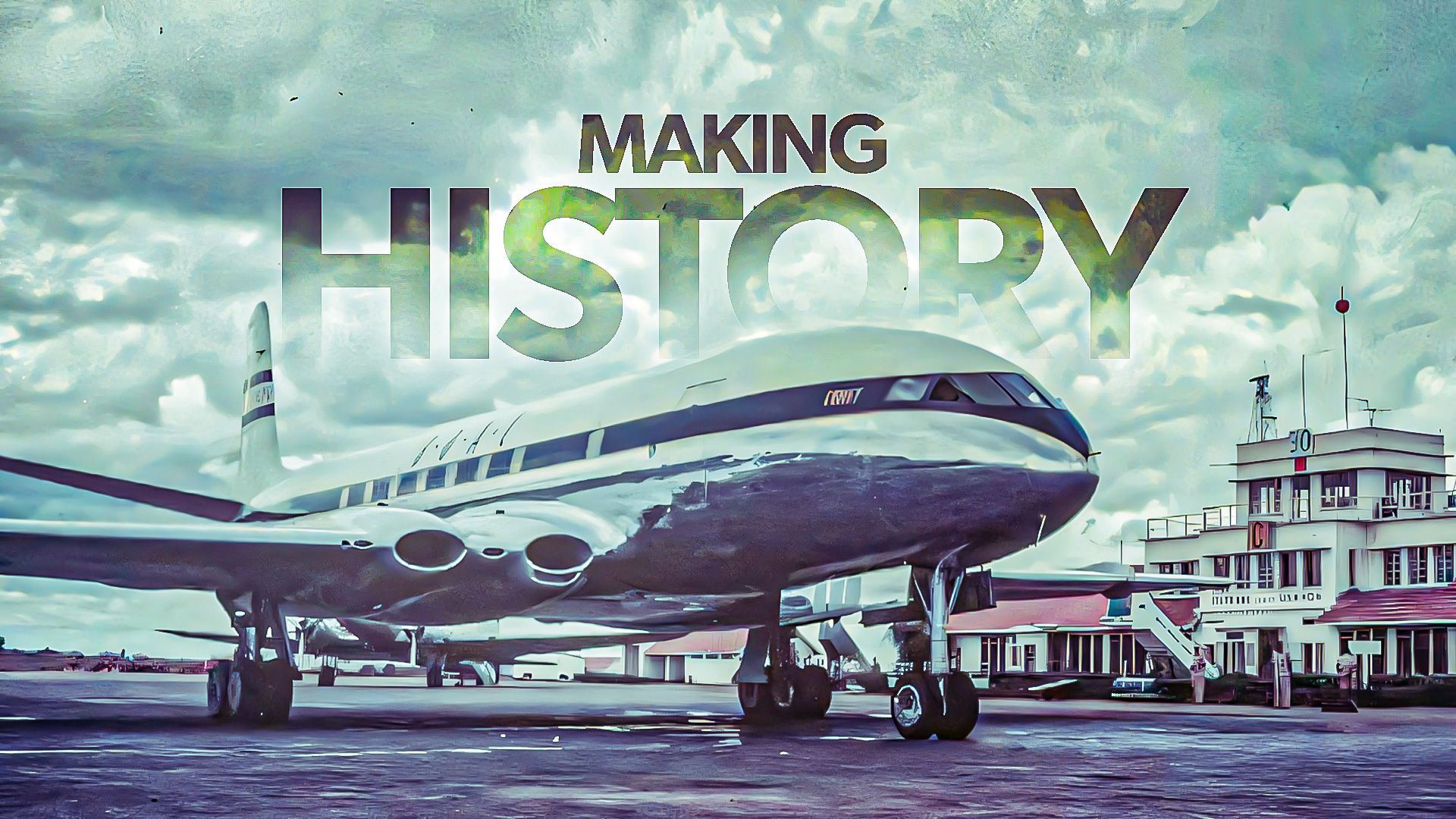
UPDATE: The legacy of the De Havilland Comet, the world’s first jet airliner, is being revisited as aviation experts highlight its pivotal role in revolutionizing commercial air travel. Launched on May 2, 1952, with its inaugural flight from London to Johannesburg, the Comet showcased a transformative leap in long-distance travel, significantly reducing journey times and raising passenger expectations.
The Comet’s introduction marked the dawn of the jet age, offering flights that were not only faster—taking just under 24 hours with stops—compared to the nearly 28 hours required by piston-engine aircraft, but also more comfortable. Passengers experienced a quieter cabin and smoother flights, setting a new standard for air travel. A round-trip ticket cost £315, equivalent to approximately $10,700 today, making it a luxurious option for travelers.
Despite its groundbreaking features, the Comet’s early success was marred by a series of tragic accidents linked to structural flaws. In its first year of operations, the aircraft carried over 30,000 passengers, but three catastrophic failures raised serious concerns about its safety. Investigators identified metal fatigue as the main culprit, leading to a complete grounding of the fleet while engineers rectified the design flaws.
The aviation industry learned crucial lessons from the Comet’s challenges, reshaping safety protocols for future aircraft. These reforms included advancements in pressurization and fatigue testing, which have become standard practices in modern aviation. The Comet’s redesign efforts culminated in the introduction of the Comet 4 series, which boasted improved structural integrity with rounded windows to mitigate stress concentrations. However, the damage to its reputation had lasting effects, as airlines began to favor newer models like the Boeing 707 and Douglas DC-8, which offered greater efficiency and capacity.
The Comet’s journey from a symbol of innovation to a cautionary tale underscores its complex legacy. It not only sparked the jet age but also laid the groundwork for the safe and reliable jetliners that followed. As experts reflect on this historic aircraft, they emphasize its importance in shaping the future of commercial aviation and ensuring the safety standards that we now take for granted.
As the world remembers the Comet, its influence is evident in today’s air travel landscape, where speed, efficiency, and passenger comfort remain paramount. The advancements initiated by this pioneering aircraft continue to resonate, making air travel more accessible and enjoyable for millions worldwide.
Next Steps: Aviation enthusiasts and industry professionals are encouraged to delve deeper into the Comet’s history and the profound impact it had on the evolution of air travel. As the industry commemorates this iconic aircraft, discussions around modern safety standards and technological advancements will continue to shape the future of aviation.