UPDATE: Travelers at Denver International Airport (DEN) are experiencing some of the most unique and unusual sights in air travel. As of 2024, the airport has welcomed a staggering 82.4 million passengers, solidifying its status as the fourth-busiest airport in the U.S. and the sixth-busiest in the world.
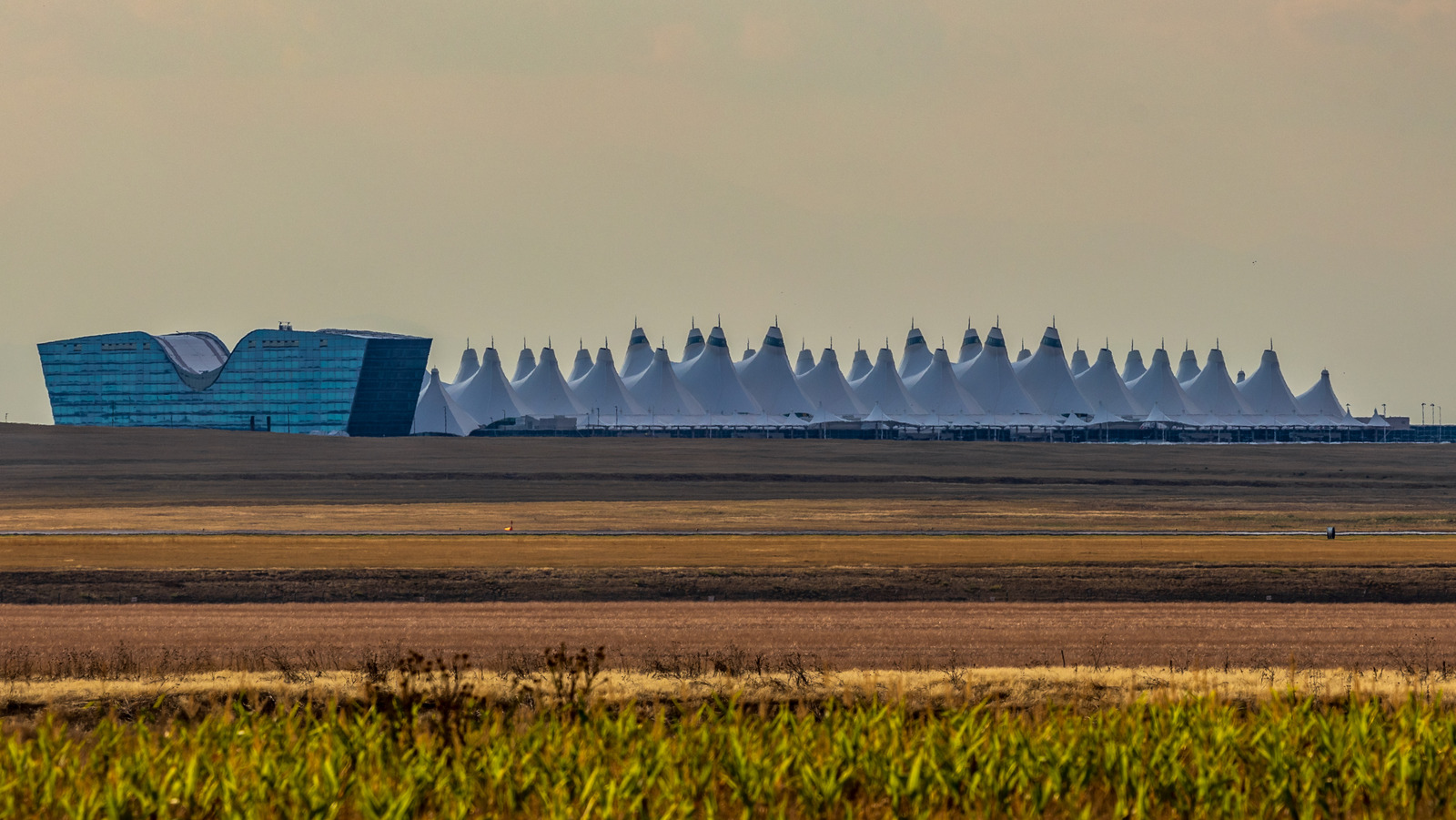
Located just 21 miles east of downtown Denver, DEN not only serves as a gateway for ski trips and sports events but also as a hub of artistic and architectural marvels. The iconic Jeppesen Terminal, with its teepee-inspired design, is just the start of the airport’s eccentricities.
One notable feature is the Westin Hotel, opened in 2015, which is attached to the terminal. Its striking architecture has sparked debates about its resemblance to various shapes, including a bird in flight and even a giant mustache. Travelers can enjoy luxury accommodations and easy access to downtown Denver via light rail, all while surrounded by this controversial design.
Art installations throughout the airport add another layer of intrigue. Among the most famous is the 32-foot-tall Mustang, often referred to as Blucifer. This blue horse, illuminated by blood-red LED eyes, captures attention as it looms over travelers on Peña Boulevard. However, its history is eerie; artist Luis Jiménez tragically died during the statue’s construction in 2006.
Artistic curiosities continue with the presence of two gargoyles created by artist Terry Allen, perched above baggage claims. These bronze figures, collectively titled “Notre Denver”, are intended to protect travelers and their belongings. A whimsical animatronic gargoyle named Greg was once a hit but has since disappeared, leaving behind only the silent guardians.
Even the airport’s infrastructure is steeped in mystery. Underground tunnels facilitate efficient transport between terminals, but local legends suggest hidden bunkers and secret societies, including the Freemasons, are concealed beneath the airport. These theories gained traction with the airport’s playful nod to conspiracy culture through signage referencing “lizard people” and the Illuminati.
The airport also features a multitude of murals, some of which have stirred controversy due to their unsettling imagery. Artist Leo Tanguma created pieces depicting both hope and despair, leading to petitions from travelers who find the artwork alarming. Currently, these murals are in storage due to ongoing construction but are expected to return, likely stirring debate once again.
In light of these fascinating features, Denver International Airport is not just a transit hub but a cultural phenomenon that continues to captivate millions. As travelers pass through its gates, they experience not only the thrill of travel but also the oddities that make DEN a unique destination in its own right.
As more visitors arrive, the buzz around these peculiarities is sure to grow. Keep an eye on Denver International Airport for updates on its evolving artistic landscape and intriguing history as it continues to redefine what an airport experience can be.