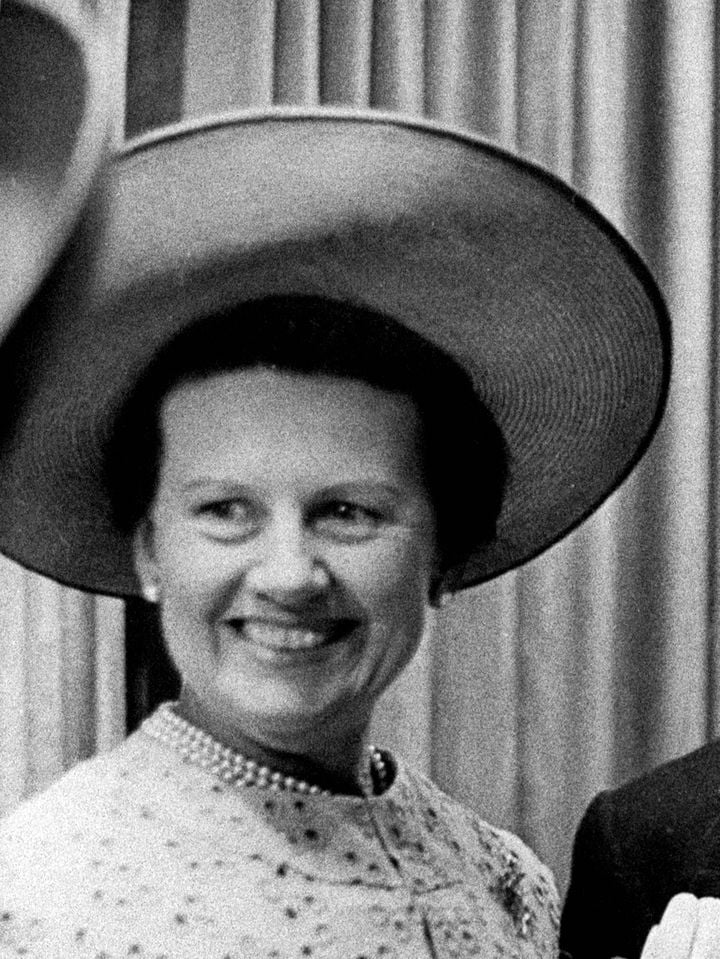
UPDATE: A High Court judge has ruled that the family of Muriel McKay, who was kidnapped and murdered over 55 years ago, cannot conduct a radar scan of a garden in East London where they believe her remains are buried. This urgent ruling comes following new claims about her disappearance, intensifying the family’s long-standing search for closure.
On Monday, Ian McKay and Dianne Levinson, two of Ms. McKay’s children, petitioned the court for permission to perform a “ground-penetrating radar survey” of a shared garden on Bethnal Green Road. They argue that recent information suggests their mother may be buried there. However, opposing homeowner Madeleine Higson contested the request, citing harassment and significant distress caused by the family’s attempts to access her property.
Judge Richard Smith stated that while Ms. McKay’s case is an “abhorrent crime,” the family did not demonstrate an urgent need for the scanning request. He emphasized that the existing evidence regarding the presence of her remains is “thin” and suggested that even if the survey were conducted, it would not guarantee conclusive results.
Muriel McKay, age 55 at the time of her abduction, was taken from her home in Wimbledon on December 29, 1969, in a shocking kidnapping that was initially a case of mistaken identity for media mogul Rupert Murdoch’s then-wife. Following her kidnapping, brothers Arthur and Nizamodeen Hosein were arrested and convicted of her murder, marking one of the first murder cases prosecuted without a body.
The family’s request for the radar survey was sparked by information from Hayley Frais, whose father operated a tailor shop nearby during the time of Ms. McKay’s disappearance. She claimed her father mentioned a strong smell at the premises just before Ms. McKay went missing. Despite this new lead, police have determined that the site does not meet their “evidential threshold” for excavation, although they remain open to any information derived from a radar scan.
This latest ruling has left the McKay family disheartened. Mark Dyer, Ms. McKay’s grandson, expressed the emotional weight of the case, stating it is “important to the whole family” to find her remains, hoping she “would like to come home for Christmas.” The family’s attempts to access the garden have drawn scrutiny, with claims of “borderline harassment” directed at them by Ms. Higson, who described their repeated requests as a “bombardment.”
As the legal battle continues, the McKay family’s desire for closure remains a poignant reminder of the tragedy that has left a lasting mark on their lives. Next steps for the family may involve exploring alternative legal avenues or seeking further information to support their claims.
The emotional stakes are high as the family fights for answers, and the public continues to follow this heart-wrenching saga, hoping for a resolution that has eluded them for decades.