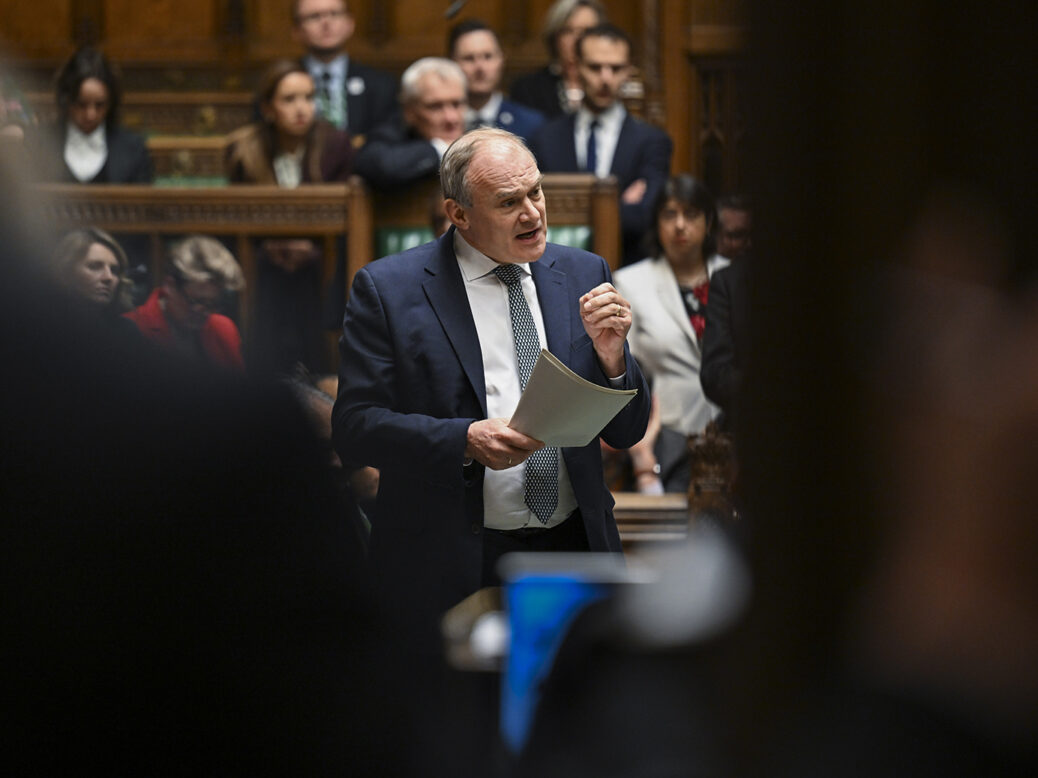
UPDATE: In a surprising turn of events, the Liberal Democrats have secured a pivotal victory in Parliament, passing a Ten Minute Rule bill calling for negotiations to join a bespoke customs union with the EU. The bill narrowly passed with a tie-break vote from the deputy speaker, marking a significant moment for the party just before the Christmas recess.
ED DAVEY, the party leader, hailed this outcome as a “historic victory,” igniting hopes for the future as the 2026 elections loom large on the horizon. Although this type of bill often struggles to progress into law, the mood among Lib Dem MPs is buoyant, with many expressing excitement over a newfound media presence.
As the third-largest party in Parliament with 72 MPs, the Lib Dems have faced challenges in breaking through the noise of insurgent parties. Yet, recent polling shows that Ed Davey holds the highest favorability ratings among UK party leaders, often outperforming opponents in head-to-head matchups for Prime Minister.
The landscape of British politics is shifting, with Reform UK emerging as a formidable presence. At the party’s conference in Bournemouth, Davey positioned the Lib Dems as the antidote to Reform’s populism, mentioning its leader, Nigel Farage, an astounding 30 times. This strategy, however, has drawn criticism, with some insiders cautioning against being perceived solely as a counter to Reform without a clear articulation of the party’s own vision.
In a fractured political environment, the Lib Dems aim to define themselves as a hyper-local party that addresses community issues. Drawing from their recent successes in local elections, the party has gained more council seats than the Conservatives and Labour combined. A notable example includes their triumph in Preston and gains in Surrey against both the Greens and Conservatives.
Local issues resonate strongly with voters. The Lib Dems have been vocal about pressing matters such as the illegal rubbish pile in Kidlington and water outages in Tunbridge Wells, where MP Mike Martin has leveraged social media to keep constituents informed. This local approach is seen as a strategy to highlight the party’s effectiveness while Reform focuses on broader narratives.
The growing dissatisfaction with major parties presents an opportunity for the Lib Dems to position themselves as a viable alternative. With Brexit’s long-term economic impacts becoming clearer, more voters are questioning the decision to leave the EU. Recent data indicates that UK GDP is now estimated to be 6-8 percent smaller than it could have been, with the government losing an estimated £90 billion annually in tax revenue.
Polls suggest that a majority of the British public now supports rejoining the EU, with 56 percent favoring a return to closer ties. As the cost of living crisis continues to dominate discussions, the Lib Dems believe they have found a compelling argument for re-engagement on Brexit.
Al Pinkerton, the Lib Dem Europe spokesperson who introduced the customs union bill, emphasizes the party’s commitment to pushing for growth and addressing the pressing issues affecting voters. In a notable show of unity, Labour MPs joined Lib Dems in supporting the customs motion, indicating a potential shift in political alliances.
As the atmosphere grows increasingly competitive, the Lib Dems are keenly aware that they must not only differentiate themselves from Reform but also articulate a strong national message. While some party members express concern over a lack of a clear identity, many remain optimistic about the Lib Dems’ prospects leading into the 2026 elections.
“The Lib Dems are the strongest Reform-fighting machine in British politics,” a party source stated. With the right strategy and a focus on local issues, the party believes it can capitalize on Reform’s rise and redefine its own narrative in a rapidly changing political landscape.
As the momentum builds, all eyes will be on the upcoming elections. Can the Liberal Democrats leverage their recent victories and public sentiment to reshape the political narrative in their favor? The race is on, and the stakes have never been higher.