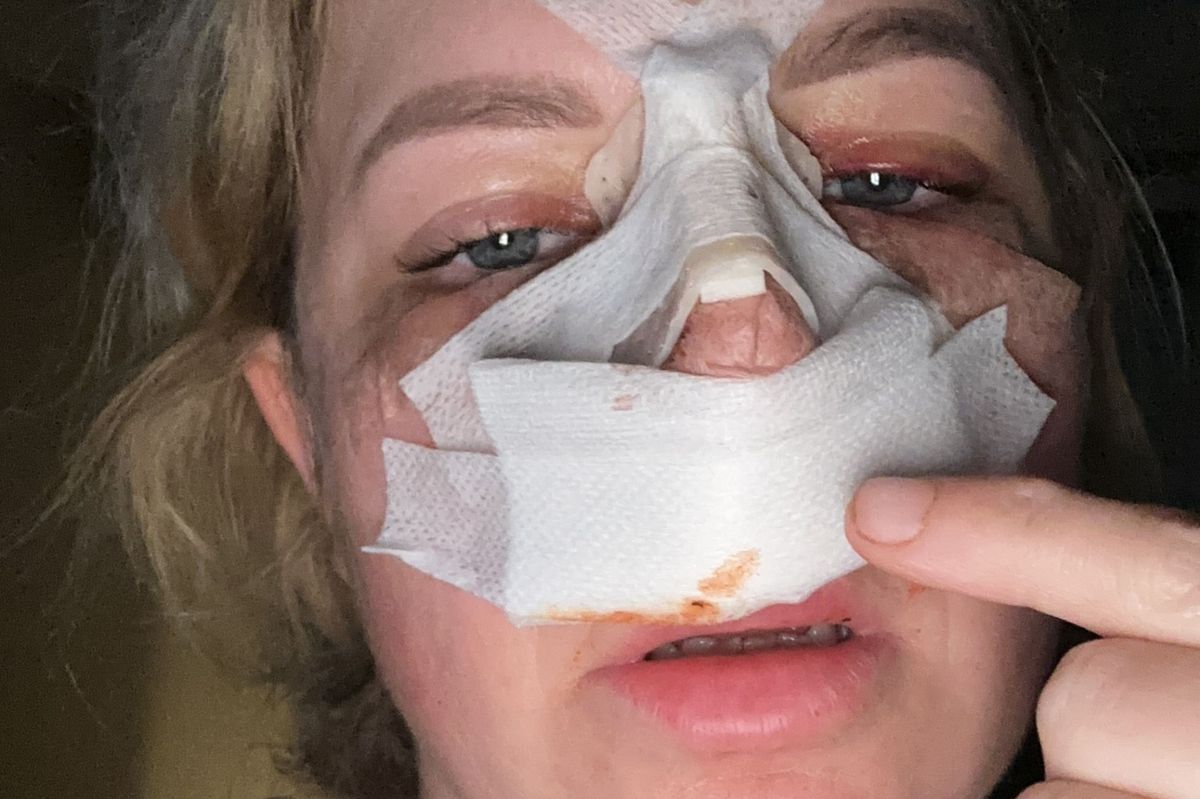
URGENT UPDATE: A mother’s quest for cosmetic surgery in Turkey has turned into a nightmare, leaving her with a botched procedure and a nose she describes as ‘piggified.’ Kayleigh Mckenna, aged 35, traveled to Turkey in October 2024, hoping to resolve her deviated septum and undergo a breast reduction for a total of £4,500. Now, she’s warning others about the potential dangers of surgery abroad.
Mckenna’s surgery was intended to last around seven hours but allegedly stretched to ten. Following the operation, she left the clinic “screaming in pain,” and soon developed troubling symptoms, including blood circulation issues in her breasts. Just days later, complications arose as her left nostril became “completely blocked,” prompting her surgeon to remove a blood clot and take out her splints prematurely.
Upon returning to the UK, Mckenna was devastated to learn from local doctors that her septum remained deviated, contradicting the very reason for her surgery. After enduring further complications, including sinus infections and the need for stitches to be removed at a UK clinic in December 2024, she now describes her nose as “collapsed and wonky,” significantly affecting her ability to breathe.
Mckenna expressed her frustration, stating, “I regret having surgery. It’s affecting my mental health and confidence when I look in the mirror.” She revealed that she must now rely on nasal spray every week just to breathe comfortably. One shocking detail is that she feels compelled to pull her nostril to the side to achieve even minimal airflow.
Now, facing a choice between a private operation costing £9,000 or a minor procedure on the NHS that may not resolve her issues, Mckenna is at a crossroads. “It feels like they’ve just done a quick fix,” she lamented, adding that her nose looks markedly different and appears wonky in photographs.
As she continues to deal with the aftermath of her surgery, Mckenna is urging others to reconsider traveling abroad for cosmetic procedures. “If you want something done, pay that extra and get it done in your own country,” she warns.
Her ordeal serves as a stark reminder of the potential risks associated with overseas surgeries, particularly when cost-cutting measures come into play. Mckenna’s experience is not isolated, as numerous patients have reported similar complications after undergoing procedures in Turkey.
With her health and appearance in jeopardy, Kayleigh Mckenna is determined to raise awareness about the hidden dangers of cosmetic surgery abroad. As she navigates her recovery and the possibility of further operations, she hopes her story will resonate with others contemplating similar choices.
As the conversation around international cosmetic surgery continues to grow, Mckenna’s cautionary tale shines a light on the importance of thorough research and consideration before making life-altering decisions.