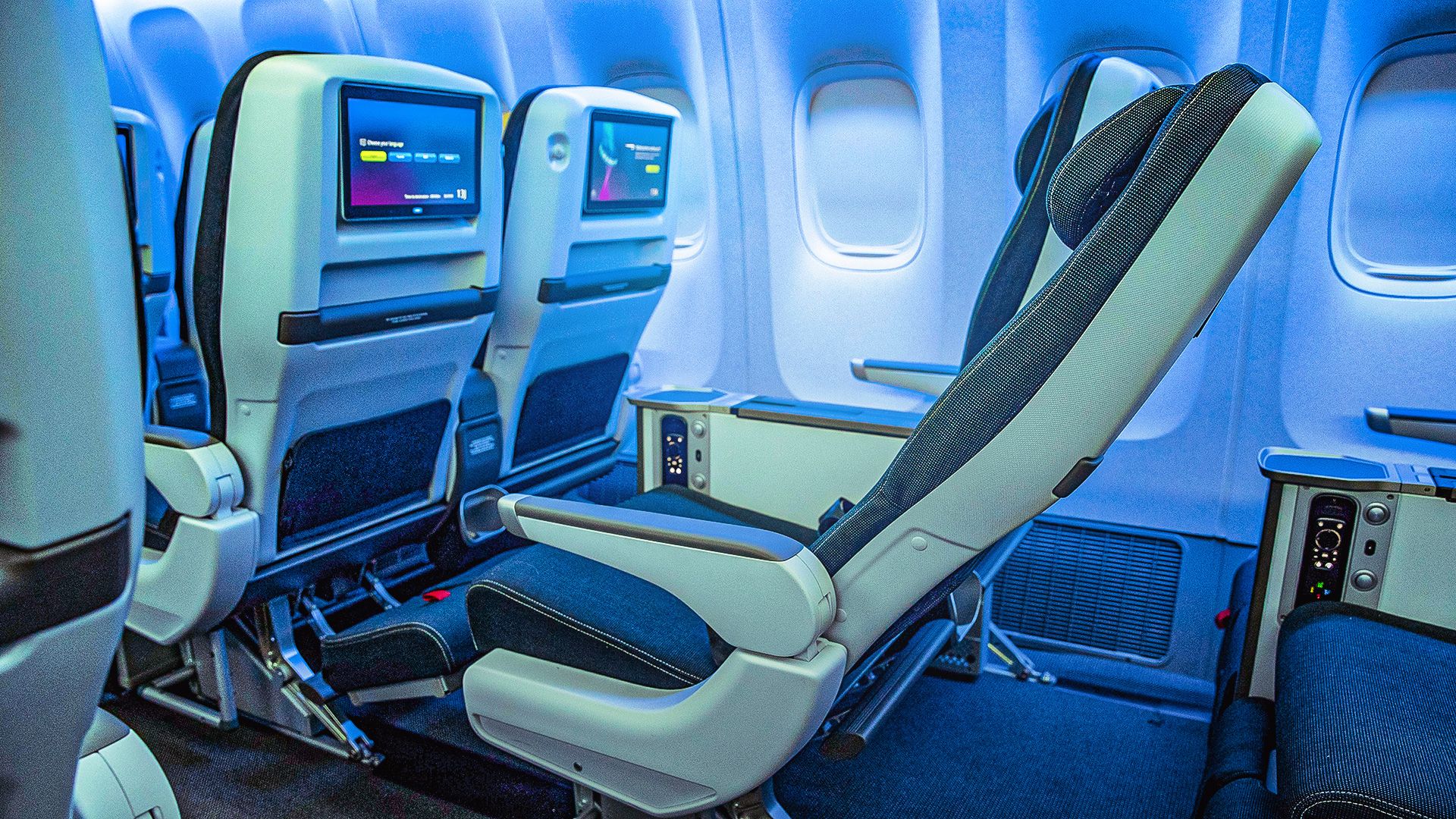
Airlines are increasingly emphasizing the distinction between premium economy and standard economy seating, particularly on long-haul flights. While most carriers adhere to established standards for these classes, the specific dimensions and amenities can vary significantly. This article explores how premium economy seats offer a more spacious and comfortable option, while remaining affordable compared to business class.
Understanding Seat Dimensions and Comfort
Passengers flying in economy class typically experience an average seat pitch of 30 to 31 inches (76-79 cm) on long-haul routes. However, this can decrease to as low as 28 inches (71 cm) on some low-cost airlines. Seat width also varies, with economy class seats generally measuring between 17 and 18 inches (43-46 cm) across, averaging around 17.5 inches (44.5 cm).
In contrast, premium economy seats provide additional comfort with a typical seat pitch of 38 inches (97 cm) or more, with some airlines like Emirates and Cathay Pacific offering up to 40 inches (102 cm). The width of premium economy seats usually ranges from 19 to 19.5 inches (48-49.5 cm), providing a noticeable upgrade in personal space.
One key difference is the recline of the seats. Many economy class seats are “prereclined,” limiting their ability to recline. Premium economy seats, however, generally allow for an additional 7 to 8 inches of recline, enhancing passenger comfort without encroaching on others’ space.
Fixed Cabin Designs and Airline Strategies
It’s important to note that airlines have limited control over the effective width of economy-class seats, which is determined by aircraft design. Most aircraft are configured to seat a fixed number of passengers abreast in economy class, typically 10 across in many Boeing 777 configurations. Some airlines, such as Japan Airlines, have opted for a 9-abreast configuration in their long-haul Boeing 777-300ERs, providing passengers with extra room.
For premium economy, airlines can reduce the number of seats across the cabin. For instance, Emirates configures its economy class on new A350s with a 3-3-3 arrangement, while its premium economy features a 2-3-2 layout. This spacing allows for a more relaxed flying experience.
Overall, premium economy seats offer an average of 5 to 8 more inches of legroom and a wider seat, making them a compelling choice for travelers seeking a more comfortable long-haul flight.
Comparing Costs and Passenger Preferences
According to Skyscanner, a premium economy fare typically costs between 50% to 100% more than a standard economy fare, yet remains significantly less than business class tickets, which can be two to three times the price. In Europe, long-haul premium economy seats often range from 1.5 to 2.3 times the economy price, while still providing a better overall experience.
The airline industry is witnessing a shift in consumer preferences. As flying becomes more accessible, many travelers are seeking alternatives to traditional first class, which is increasingly rare among US carriers. Instead, passengers are gravitating towards premium economy as a “sweet spot” that balances affordability with comfort.
As premium economy continues to gain popularity, airlines are responding by retrofitting their fleets and enhancing their offerings. Delta Airlines recently reported that its revenue from premium economy surpassed that from economy for the first time in late 2025, highlighting the growing demand for this class.
In summary, premium economy seats provide a substantial upgrade over standard economy options. With greater legroom, wider seating, and additional amenities, they represent an appealing choice for travelers seeking comfort on long journeys without the premium price tag of business class. The ongoing evolution in airline seating reflects not only changing passenger preferences but also the industry’s adaptation to meet these demands.