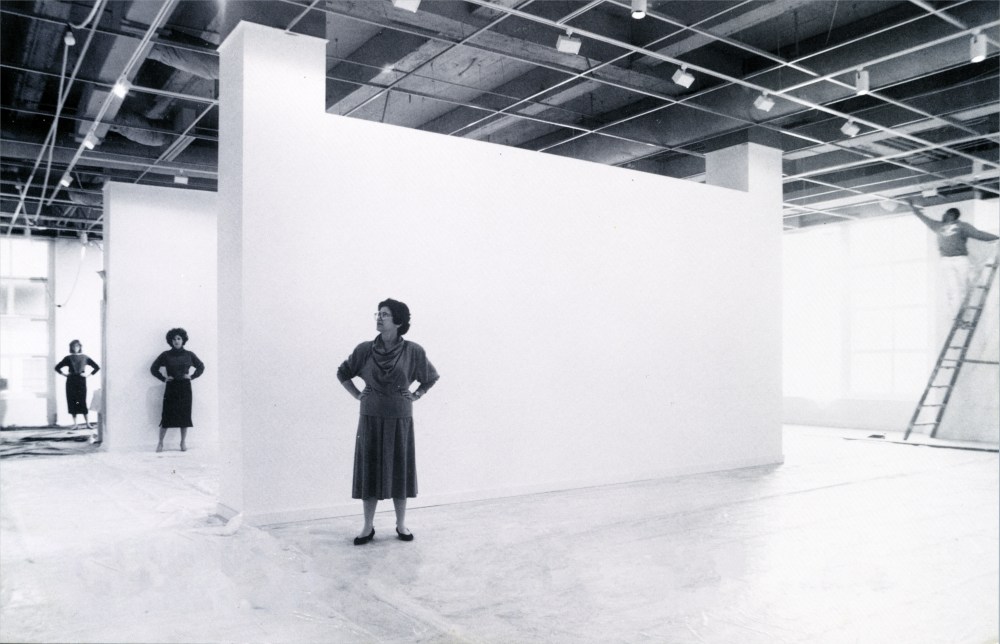
URGENT UPDATE: The iconic Rena Bransten Gallery in San Francisco will officially close its doors on November 22, 2023, marking the end of an era after 50 years of championing BIPOC and female artists. The gallery’s current exhibition featuring renowned artist Oliver Lee Jackson will be its last, as the owners shift to remote programming and collaborative exhibitions at various venues.
Gallery founders Rena and Trish Bransten announced the decision in a press release, citing the changing economics of the art world. “The economics of running a brick-and-mortar gallery…has shifted, asking us to consider new models,” they stated. This closure reflects a broader trend as the art community grapples with evolving tastes and financial pressures.
The gallery, originally located at 75 Geary Street, became known for its commitment to diverse artists, including Viola Frey and Dawoud Bey. “It is not about [Rena and Trish Bransten], it’s about the artists,” Jackson emphasized in a recent interview. The gallery was a welcoming space for all, providing free access to serious art and meaningful conversations.
Over the years, the gallery faced significant challenges. In 2015, a tech company offered landlords triple the rent, forcing a move from a spacious venue to a smaller storefront on Market Street, and finally to its current location at the Minnesota Street Project in the Dogpatch neighborhood.
As the gallery prepares to close, it joins a wave of recent closures affecting other notable institutions, including Clearing and Blum in Los Angeles, as well as Venus over Manhattan and the Tilton Gallery in New York. This trend highlights the pressing challenges within the art economy, which is currently facing steep tariffs and global instability.
The Bransten Gallery’s legacy is one of resilience and dedication to underrepresented artists. “We have proudly celebrated artists who were, and sometimes still are, overlooked by mainstream institutions,” the gallerists reflected. As the local art scene prepares for the gallery’s closure, the impact on the community and artists involved will be felt deeply.
This significant development underscores the urgent need for new models in the art world. As the Bransten Gallery wraps up its final exhibition, the future of art representation in San Francisco—and beyond—remains uncertain. The community is encouraged to visit the gallery before its closure to celebrate its rich history and the artists it has supported for decades.
Stay tuned for further updates on the evolving art landscape as more galleries adapt to the changing tides. Share this news to keep the conversation going about the future of art representation.