Saudi Arabia has entered into agreements with the Syrian Petroleum Company aimed at reviving and developing Syria’s oil and gas fields. This move is part of a broader strategy orchestrated by the United States and the United Kingdom following the removal of President Bashar al-Assad in December 2022. The approach seeks to avoid a direct occupation in favor of reconstruction led by influential Arab states, with Western firms providing essential support.
Strategic Partnerships and Operational Plans
The agreements between Saudi Arabia and Syria mark a significant shift in the region’s energy landscape. This is not merely a goodwill gesture; these plans are operational and detailed. The Saudi Ministry of Energy is directly involved, guiding key companies like TAQA, ADES Holding, Arabian Drilling, and the Arabian Geophysical and Surveying Company (ARGAS) as they establish a presence in Syria.
These companies are set to deliver a range of services, including seismic surveying, drilling operations, and workforce training. Specifically, ARGAS will conduct 2D and 3D seismic surveys to support exploration efforts, while Arabian Drilling will supply drilling rigs and perform various operational tasks. TAQA is responsible for integrated solutions related to the construction and maintenance of oil and gas fields, and ADES Holding will focus initially on increasing output from five key gas fields: Abu Rabah, Qamqam, North Al-Faydh, Al-Tiyas, and Zumlat al-Mahar.
This development follows the UAE’s early involvement in Syria’s gas sector, notably through a preliminary agreement made on November 12, 2022, with Syria’s state oil company, aimed at revitalizing critical gas fields. Together, these Gulf-led initiatives complement efforts by U.S. firms such as Baker Hughes and Hunt Energy, which are also engaged in plans to rebuild Syria’s energy infrastructure.
Reviving Syria’s Energy Sector
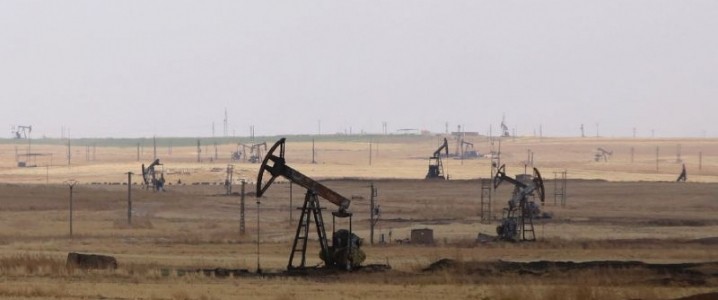
Despite the challenges presented by over a decade of civil war, Syria’s oil and gas sectors still hold significant potential. Before the conflict began, Syria was producing approximately 316 billion cubic feet of dry natural gas per day and possessed proven reserves of 8.5 trillion cubic feet. The country was also a significant oil producer, generating around 400,000 barrels per day from proven reserves estimated at 2.5 billion barrels.
Russia’s military intervention in support of al-Assad has further complicated the situation. Following this intervention, Russia and Syria established a 2015 Cooperation Plan to restore energy facilities across the country. This included the rehabilitation of vital power plants and the expansion of the Homs refinery, targeting a capacity increase to 360,000 barrels per day.
Overall, the groundwork for Syria’s energy revival has been laid primarily by Russian investment and military support, positioning Moscow as a key player in the region. The geopolitical implications of Syria’s energy resources cannot be overstated; the country has served as a critical asset for Russia, providing strategic access to the Mediterranean and serving as a base for military operations.
The recent agreements between Saudi Arabia and Syria signify a shift in control over these vital energy resources. As the U.S. and its allies work to dismantle Russia’s foothold in the region, they are simultaneously promoting a reconstruction model that facilitates the re-establishment of Western influence while integrating key Arab nations into this framework.
In this context, the initiatives undertaken by Saudi Arabia and the UAE are not isolated investments but rather interconnected efforts designed to reshape Syria’s energy and political landscape, ultimately countering the influence that Russia has built up over years of involvement.