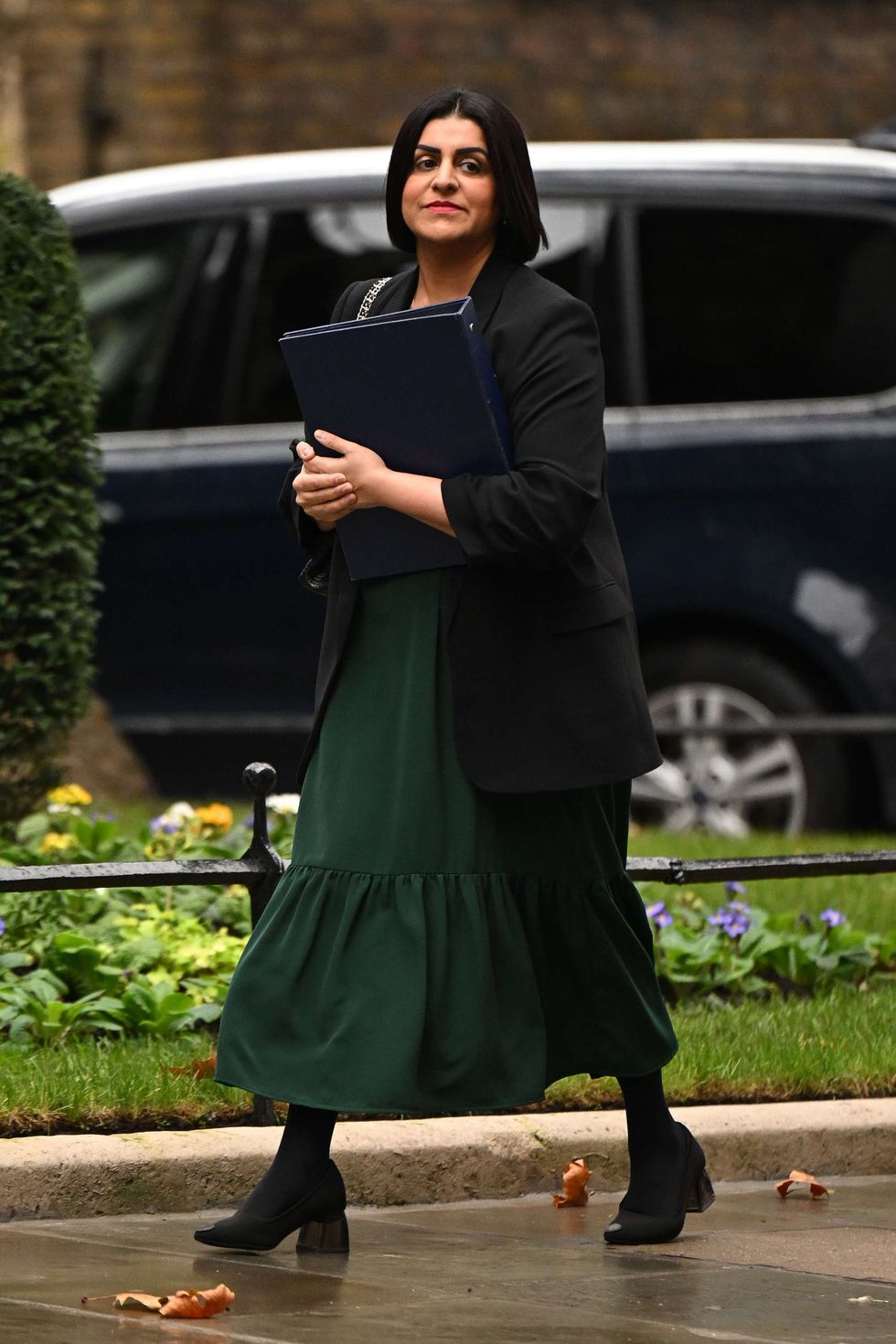
UPDATE: Shabana Mahmood, the UK’s Home Secretary, confronts entrenched prejudice as she embarks on her crucial first hundred days in office. In a candid discussion with former Prime Minister Tony Blair, Mahmood highlighted the urgent need to tackle not just asylum challenges but also the pervasive biases within British society.
During their conversation, held recently in Westminster, Mahmood expressed, “There are a hundred landmines every day,” emphasizing the multifaceted challenges she faces. As speculation mounts regarding Labour leader Sir Keir Starmer‘s future, her bold stance on immigration and race relations is drawing both support and skepticism.
Mahmood’s remarks resonate strongly in a politically charged environment. She declared, “There is something very clarifying about a crisis,” framing her approach as a necessity for dramatic reform at the Home Office. This comes amid heightened scrutiny of immigration policies and the need for enhanced community cohesion.
The Home Secretary’s confident rebuttal to social media abuse—”no racist in this land is going to tell me I don’t belong in this country”—was met with applause, underscoring her commitment to combating discrimination. Yet, she acknowledges the complexity of public sentiment regarding immigration, stating, “When you don’t have rules, you get prejudices.”
Blair supported her viewpoint, recognizing the delicate balance between managing immigration and addressing legitimate public concerns. However, a warning looms: conflating these concerns with broader racial prejudices could undermine the integrity of her proposed reforms.
As the Labour Party aims to secure a third of the electorate’s support to remain in power, Mahmood’s challenge is to unite voters without alienating those drawn to right-wing alternatives. The party must also contend with the lingering shadows of past leadership, as it grapples with the rise of formidable opponents like the Reform Party.
Looking ahead, Mahmood emphasized the government’s goal to “unlock fairness, tolerance and generosity” in its public discourse. This mission includes plans for a community sponsorship program intended to create legal pathways for refugees—a move that critics argue lacks visibility and urgency.
Amidst these developments, the issue of Islamophobia persists as a critical concern. Mahmood’s position as the first British Asian minister in a Labour government underscores the stakes involved. Although she has made strides, the absence of a comprehensive strategy to combat anti-Muslim hostility remains glaring.
Former Conservative minister Dominic Grieve leads a working group tasked with defining anti-Muslim hatred, a term often confused with Islamophobia. The anticipated definition is expected to clarify the boundaries of acceptable discourse while protecting Muslims from discrimination.
Authorities report that many forms of prejudice, while not criminal, exist in public discourse. Disturbingly, statements like “never vote for a Jew or Muslim” remain lawful but reflect deep-seated biases that need addressing. Mahmood’s advocacy for stronger civic responsibility among political parties to exclude such views is a critical step forward.
As the Labour government prepares to finalize its definition of anti-Muslim hostility, anticipated for early next year, public understanding of this framework is essential. The objective is to foster legitimate debate while safeguarding against hostility and prejudice.
Mahmood’s tenure as Home Secretary is not just about policy; it’s about changing perceptions and dismantling the barriers of prejudice that hinder progress. With her bold approach and determination, she aims to lead the charge against discrimination in all its forms.
As this story develops, the political landscape in the UK remains dynamic. Observers and voters alike are urged to pay close attention to how these reforms unfold and what impact they will have on the fabric of British society. The stakes are high, and the need for change is now more urgent than ever.