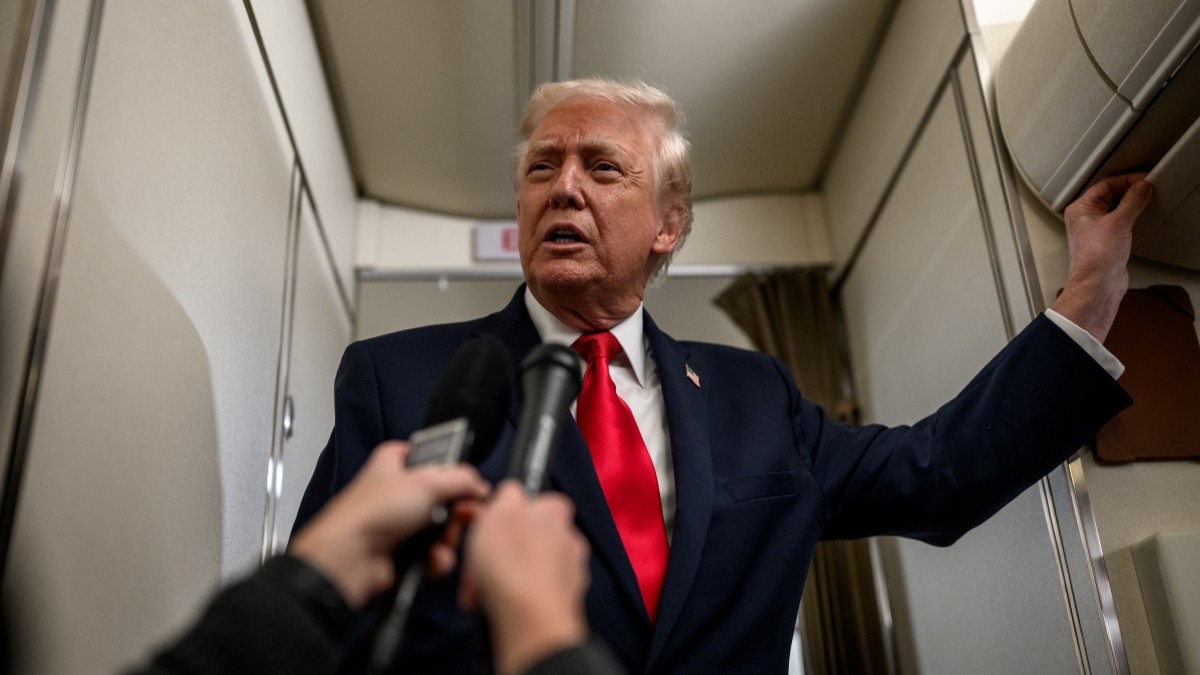
URGENT UPDATE: President Donald Trump has just confirmed that the United States plans to oversee a regime change in Venezuela, targeting dictator Nicolás Maduro. In a press conference earlier today, Trump stated that the U.S. will “run” Venezuela, signaling a dramatic shift in foreign policy that could escalate tensions in the region.
Trump’s comments come on the heels of a covert military operation aimed at Maduro, which included strategic airstrikes. The President emphasized, “We are not afraid of boots on the ground,” indicating a readiness for direct involvement if necessary.
This announcement raises urgent questions about the future of U.S.-Venezuela relations and the potential for military conflict. Analysts had previously speculated that Trump would avoid regime change, believing he lacked a coherent foreign policy doctrine. However, today’s remarks reveal a stark reality: Trump’s approach may be driven more by opportunism and internal political dynamics than by any established doctrine.
Despite skepticism from seasoned observers, who viewed Trump as risk-averse in military engagements, this latest development suggests a shift towards aggressive action. Many analysts had assumed that Trump’s reluctance to engage in prolonged military commitments would extend to Venezuela. Yet, the landscape appears different now as the administration seeks avenues for hawkish foreign policy in the absence of confrontations with larger powers like Russia or China.
Trump’s confidence in controlling the situation has raised eyebrows. He claimed that the Venezuelan vice president is willing to cooperate, stating, “She doesn’t have a choice,” a comment that reflects his belief in a swift transition. However, the feasibility of this assertion remains uncertain, as the realities on the ground in Venezuela are complex and fraught with danger.
Observers must recalibrate their understanding of Trump’s foreign policy. His actions may not align with traditional strategic frameworks, making predictions difficult. The focus on Venezuela may be a warning shot of what could happen in other global hotspots as the President seeks to assert U.S. influence.
As tensions rise, the international community watches closely. The implications of Trump’s statements could lead to a significant escalation of military involvement in Venezuela, with potential repercussions for regional stability. The U.S. military’s movements in the Caribbean and recent strikes on Venezuelan assets signal a serious commitment to this objective.
The situation remains fluid, and analysts are urged to reconsider their assumptions about Trump’s foreign policy behavior. The dynamics within the administration and the evolving political context in Venezuela will play critical roles in shaping future actions.
What happens next in this unfolding drama could redefine U.S. engagement in Latin America and beyond. Stay tuned for the latest updates as this situation develops.