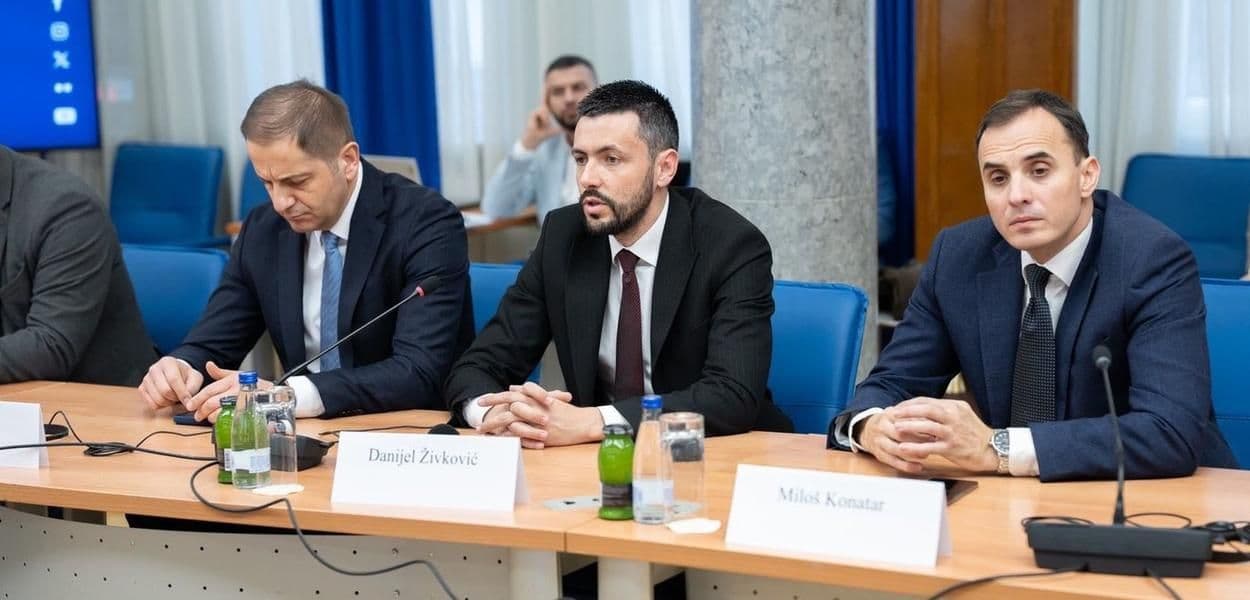
Danijel Živković, the leader of the Democratic Party of Socialists, raised significant concerns during a recent meeting with David McAllister, the Chair of the European Parliament’s Foreign Affairs Committee. He emphasized that the current European rhetoric and declared commitment to integration are being misused as a cover for the government’s serious failings in managing the state.
Živković pointed out that the government is allegedly misappropriating state resources for partisan purposes, which exacerbates the political and social instability in Montenegro. He stated, “Such practices deepen the crisis and threaten the integrity of our institutions.”
In his remarks, Živković called for a strong and accountable government that is unequivocally pro-European. He asserted that Montenegro needs a leadership capable of completing the negotiation process with the European Union and steering the country toward full membership.
Calls for Economic Development
Živković stressed the urgency of not only concluding the negotiation process but also initiating rapid economic development to address the consequences of what he described as nearly a decade and a half of disastrous governance. He noted that Montenegro’s economic health has suffered significantly under the current administration, which he claims has failed to implement effective policies.
He called on European officials to recognize the gravity of the situation and to support Montenegro in its efforts to restore stability and governance. Živković highlighted the need for a clear and actionable plan that aligns with European standards and expectations, thereby fostering confidence among citizens and investors alike.
The discourse on governance and integration comes at a crucial time for Montenegro, as it seeks to solidify its position within Europe and improve the living conditions for its citizens. Živković’s comments reflect a growing concern among political leaders in the region regarding the misuse of European integration rhetoric, which he believes distracts from the pressing economic and social issues facing the country.
As Montenegro navigates its path toward EU membership, the voices of its leaders will be pivotal in shaping the narrative and influencing the actions of both national and international stakeholders.