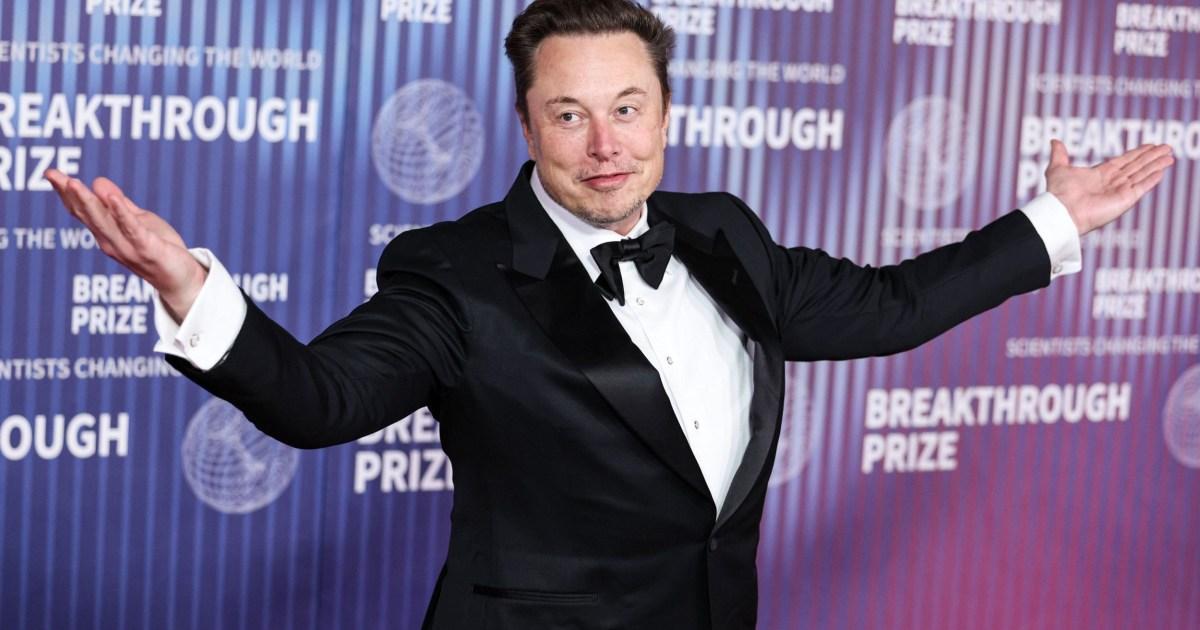
Elon Musk is on the verge of entering the “four-comma club,” potentially becoming the world’s first trillionaire by 2026. His wealth has surged to approximately $726 billion, a significant increase from the previous year, driven largely by the soaring valuation of SpaceX and recent legal victories.
SpaceX’s value has been estimated at around $800 billion in recent secondary share sales, as the company prepares to go public. Musk, who holds approximately 42% of SpaceX, stands to see his personal fortune skyrocket with the anticipated IPO. Analysts suggest that the public offering could elevate his net worth beyond the trillion-dollar mark almost overnight.
In a pivotal development, the Delaware Supreme Court recently reversed a prior ruling that had blocked Musk’s $139 billion Tesla pay package from 2018. This decision removed a significant legal hurdle that had limited his wealth, allowing Musk to inch closer to this historic financial milestone.
Despite the prospect of achieving unprecedented wealth, Musk’s journey has not been without challenges. Tesla, the electric vehicle manufacturer he leads, reported a decline in sales, delivering 1.64 million vehicles in 2025. This marks a 9% decrease from the previous year and represents the company’s second consecutive annual drop. As a result, Tesla lost its title as the world’s top electric vehicle seller to China’s BYD, which sold 2.26 million vehicles last year.
Musk’s rising wealth coincides with growing discontent among Tesla customers, driven by his political statements and the expiration of US tax incentives for electric vehicles. His high-profile relationship with former US President Donald Trump, which garnered attention over the past year, has also faced scrutiny.
Additionally, the social media platform Musk acquired and rebranded as X has sparked controversy. His AI chatbot, Grok, has drawn criticism for generating inappropriate content, including antisemitic posts. These issues have contributed to a challenging public perception for Musk.
Musk’s financial ascent can be traced back to his early ventures. Although often speculated to have benefitted from his father’s wealth, Musk has maintained that he financed his own education. He dropped out of a graduate physics program at Stanford University to launch two successful startups — Zip2 and X.com, the latter of which became PayPal. The sale of Zip2 to Compaq for $307 million and the acquisition of X.com by eBay for $1.5 billion in 2002 provided him with the capital to invest in groundbreaking companies like SpaceX and Tesla.
As Musk continues to navigate the complexities of his businesses, his ambitions remain vast. He aims to revolutionize the automotive industry with AI-powered technologies, including fully autonomous vehicles and the upcoming Cybercab. Should he achieve his performance targets, his Tesla pay package could also approach $1 trillion.
In summary, Elon Musk’s financial trajectory places him on the brink of a historic achievement. His potential rise to become the world’s first trillionaire reflects a combination of strategic business maneuvers and a complex interplay of personal and public challenges.