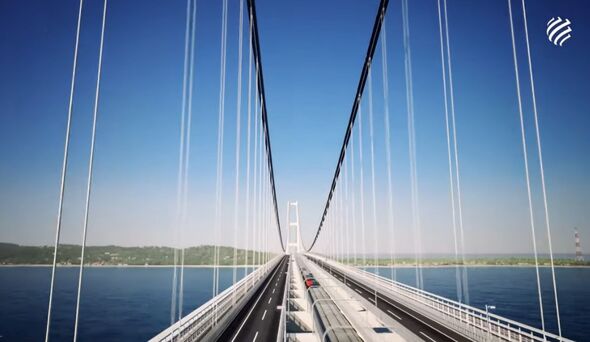
Plans to construct the world’s longest suspension bridge, a monumental project linking Sicily to mainland Italy, have encountered significant hurdles. Priced at approximately £11.9 billion, this ambitious initiative is being promoted by Italy’s right-wing government as a transformative venture for the struggling southern economy. However, the project has reignited a longstanding national debate concerning its cost, safety, and overall priorities.
The proposed bridge, which would span the Strait of Messina, aims to be a landmark achievement in Italian infrastructure. Supporters argue it will drastically reduce travel times, generate thousands of jobs, and serve as a symbol of Italy’s commitment to grand infrastructure projects. The construction has been assigned to a consortium led by the Italian infrastructure group, Webuild. CEO Pietro Salini described the endeavour as a significant technological challenge, stating, “The Strait of Messina Bridge is a huge technological challenge… It is also the Italian challenge towards the rest of the world.”
The bridge is designed to stretch nearly 2.3 miles with a single suspended span longer than any existing bridge globally. According to Italian Deputy Prime Minister and Transport Minister Matteo Salvini, the structure will feature three traffic lanes in each direction alongside a double-track railway. It is expected to accommodate up to 6,000 vehicles per hour and approximately 200 trains daily. Salvini emphasized the project’s potential to significantly reduce crossing times, aiming to cut the ferry journey across the strait from around 20 minutes—which can extend to hours during peak periods—to approximately 10 minutes by car.
Despite its ambitious goals, the project faces fierce opposition. Environmental groups, local activists, and opposition politicians warn of potential irreversible harm to delicate coastal and marine ecosystems. Critics have raised concerns about whether such substantial funds should be allocated to a single mega-project while southern Italy grapples with outdated roads, slow rail connections, and underfunded public services.
Adding to the controversy, Italy’s Court of Auditors recently intervened, halting progress on the bridge by ruling that critical procurement and environmental standards had not been adequately met. This ruling represents a significant setback for the government, casting doubt on the timeline for construction and potentially delaying the project by years. Despite this, Salvini remains determined to initiate work before the end of 2025.
The court’s decision poses a major challenge for Prime Minister Giorgia Meloni‘s administration, which has positioned the bridge as a flagship project symbolizing its economic ambitions. In response to the ruling, government officials reacted with frustration, alleging that the court has overstepped its jurisdiction. There is now speculation that the government may pursue appeals or special measures to revive the project.
As the debate continues, the future of the Strait of Messina Bridge remains uncertain, with environmental and economic implications resonating throughout Italy. The outcome will likely influence the direction of infrastructure development and investment in the region, making it a pivotal topic for both policymakers and citizens alike.