
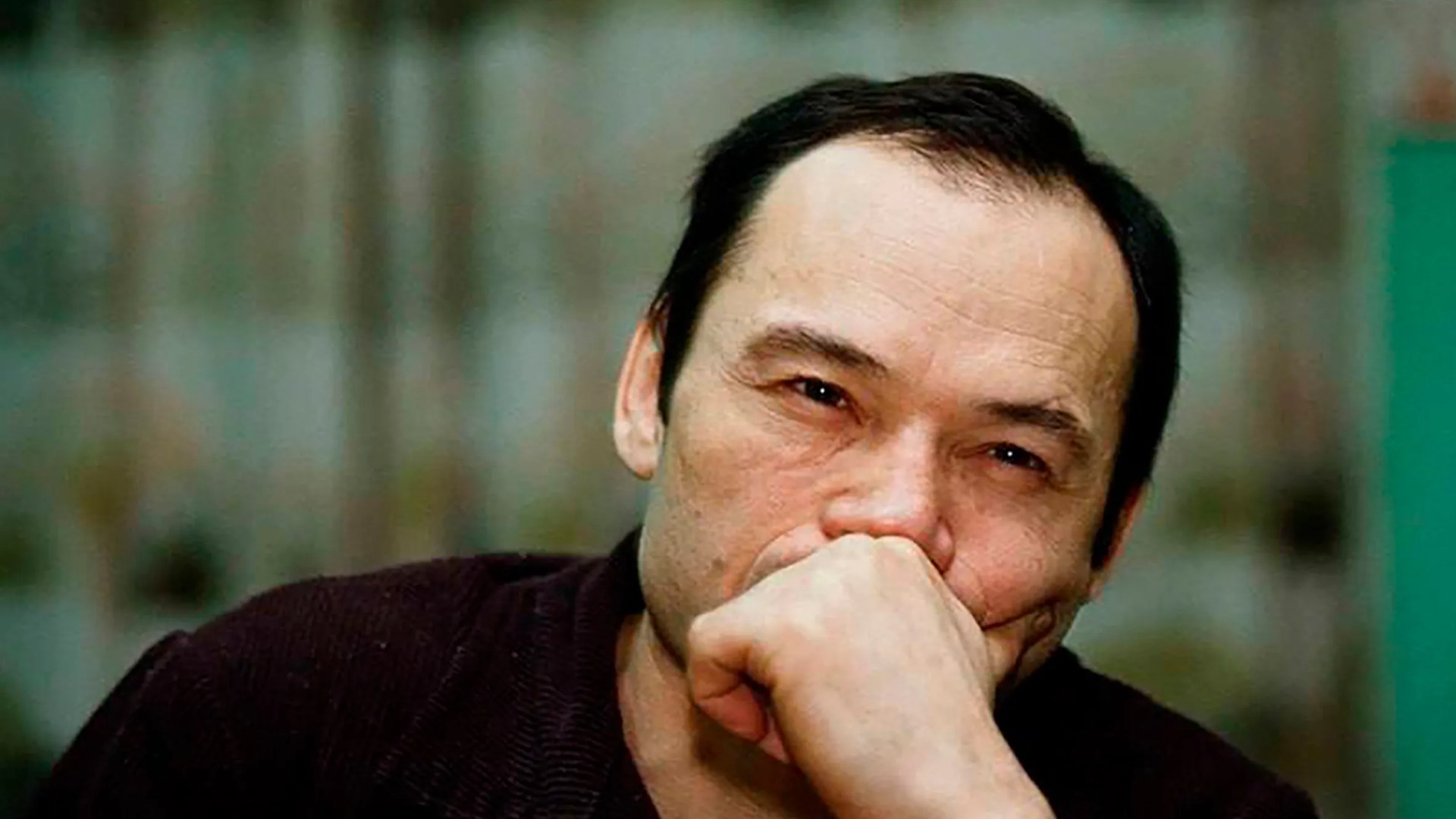
A notorious Soviet cannibal killer known as Nikolai Dzhumagaliev, infamously dubbed “Iron Fang,” has communicated for the first time in over 35 years. The 73-year-old has been held in a high-security hospital in Kazakhstan since his recapture in 1991, where he has been undergoing treatment for schizophrenia. This recent development marks a significant turn in a case that has haunted the former Soviet Union since his killing spree began in 1979.
For decades, Dzhumagaliev was implicated in the murder of at least ten victims, predominantly women and girls. His crimes, characterized by extreme violence and cannibalism, have made him a figure of terror across the region. According to doctors, Dzhumagaliev’s condition has stabilized, allowing him to contact his family. Reports indicate he has regained lucidity and is now able to communicate normally.
Recent treatment has reportedly improved Dzhumagaliev’s mental state. Russian media outlet SHOT disclosed that he will be allowed to speak with his niece twice a month, a notable shift in his long-standing isolation. His nickname, “Iron Fang,” stems from the metal crowns on his teeth, which have become emblematic of his gruesome reputation.
Dzhumagaliev’s violent history is marked by chilling details. Following his murders, he would consume the flesh of his first victim for a month, employing various cooking methods such as boiling, frying, and salting. He even confessed to serving human remains to guests. Investigators believe he developed a profound hostility towards women after contracting a sexually transmitted infection, which he viewed as a basis for his violent acts, interpreting them as a form of revenge.
The killer’s psychological profile paints a disturbing picture. Forensic psychiatrists have categorized him as a targeted serial killer, driven by misogyny and ritualistic beliefs. He viewed his acts as ritual sacrifices, aiming to gain supernatural powers from the blood of his victims. Dzhumagaliev’s delusions were further fueled by a self-identification with historical figures, claiming descent from Genghis Khan.
Dzhumagaliev’s reign of terror included a notorious escape from police custody in 1989, which instilled fear in the hearts of many Russians for 18 months. He was finally recaptured in 1991 in Soviet Uzbekistan, where footage of him speaking to police revealed his unsettling demeanor. In a chilling moment, he told officers, “I’m already in hospital, in [capital city] Tashkent,” reflecting his twisted perception of reality.
In 2016, reports of a potential escape sent shockwaves across the former USSR, but it turned out to be a false alarm. Throughout his confinement, Dzhumagaliev has remained a subject of fascination and horror, embodying the darkest aspects of human violence.
As he begins to re-establish connections with the outside world, the implications of his regained communication will undoubtedly evoke a mix of intrigue and apprehension. The legacy of his crimes continues to resonate, serving as a grim reminder of the past horrors that shaped a generation.


