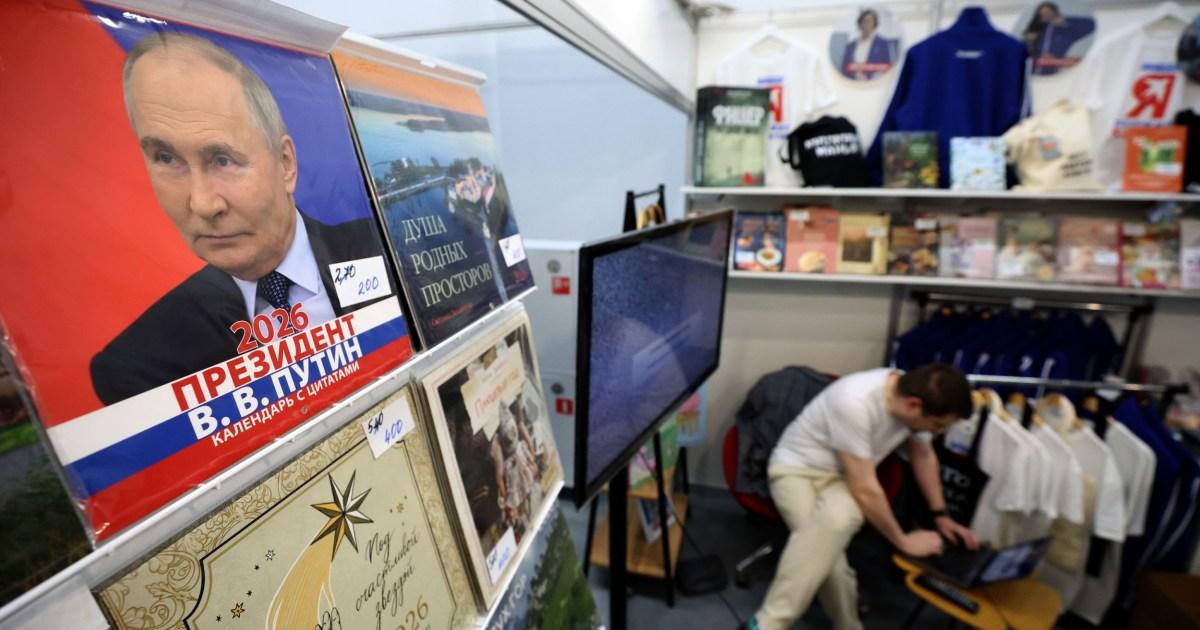
Sales of the official Vladimir Putin 2026 calendar have surged in Russia, prompting many shops to sell out quickly. Reports indicate that stores in Moscow are unable to meet the growing demand for the calendar, which features images of the Russian president engaging in various activities aimed at portraying him as a charismatic leader.
According to Yelizaveta Sokovykh, an employee at a Moscow bookstore, the interest in the calendar is exceptionally high. She noted, “They sold out very quickly. There are literally a few left. But we’re expecting deliveries soon.” The calendar includes photographs of Putin attending events, meeting with military leaders, and even playing the piano, in an apparent effort to humanize him in the eyes of the public.
This year’s edition continues a trend established in previous releases, showcasing Putin in various roles, from a judo enthusiast to a pet lover and a historian. In addition to the visuals, the calendar features a selection of “inspirational” quotes, some of which reference his ongoing invasion of Ukraine. Phrases such as “Russia’s border never ends” and advice like “My recipe for energy: Sleep little, work a lot and don’t whine” are included to reinforce his leadership narrative.
Selling at approximately £2.65, the calendar is prominently displayed in government-owned public spaces, reflecting the enduring influence of Putin, who has dominated Russian politics for over two decades. Despite the enthusiasm from some consumers, not everyone is eager to purchase the calendar. Some residents express a preference for more casual or light-hearted alternatives, suggesting calendars featuring “horses, bunnies, cats and dogs” instead.
Irina Fomichyova, a local resident, shared her reluctance to buy the calendar, stating she already owns a clock with Putin’s image, which she believes is a more lasting memento. “You know, when it expires, what would you do with it? Throw it away? Dispose? That’s not good,” she remarked.
The current climate in Russia reflects a broader trend of nostalgia for strongman leadership, as evidenced by the recent revival of memorabilia associated with historical autocrats. This phenomenon is not limited to Russia; it echoes sentiments seen globally, such as the Italian government’s recent release of a calendar honoring soldiers from Benito Mussolini’s regime.
Meanwhile, Putin recently concluded discussions with Indian Prime Minister Narendra Modi during the 23rd Russia-India Summit, marking a rare overseas visit for the Russian leader. Their meeting comes amid increasing pressure from Washington for India to distance itself from Putin’s regime. Nevertheless, the two countries have finalized a deal aimed at boosting annual trade to £75 billion by 2030.
As the calendar’s popularity continues, it serves as a reflection of the complex relationship between Russian citizens and their long-standing leader, illustrating the intertwining of personal memorabilia with national identity.