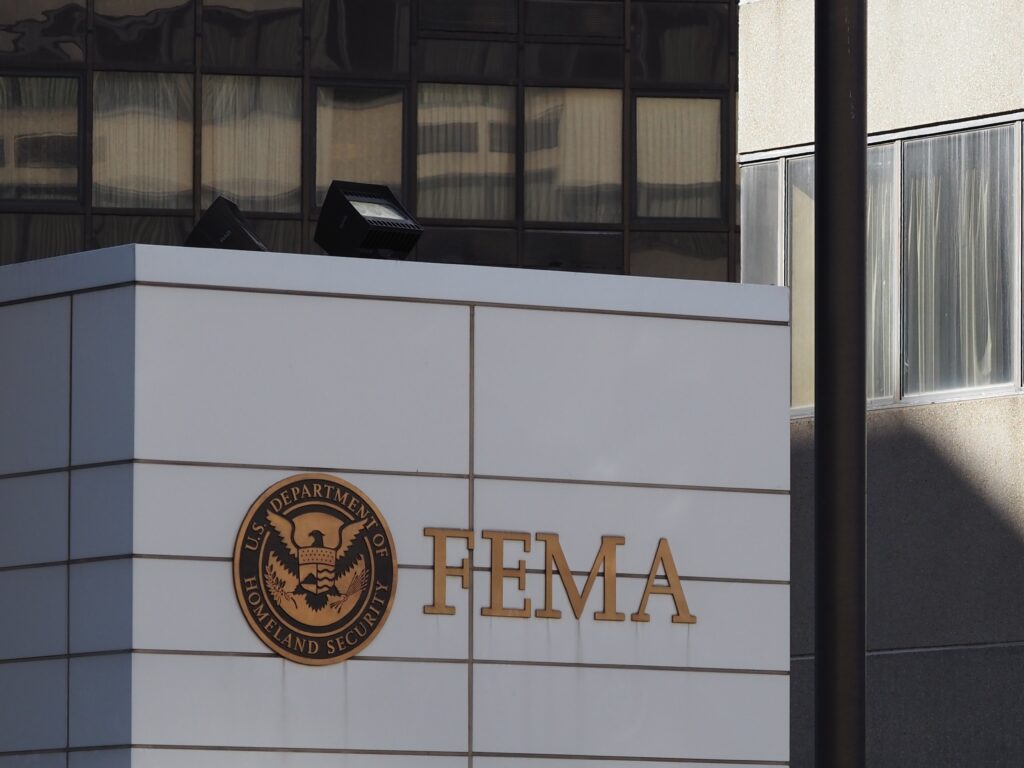
The Federal Emergency Management Agency (FEMA) is experiencing its third shutdown in recent months, as a standoff over immigration enforcement continues between Congress and the White House. As the shutdown drags on, FEMA employees face the possibility of missing paychecks, further complicating the agency’s already precarious situation.
FEMA, which plays a crucial role in disaster response and recovery, is housed within the Department of Homeland Security (DHS). Currently, the agency is operating without a permanent administrator and is under threat of significant restructuring proposed by President Donald Trump. Despite past disruptions, FEMA typically manages to keep much of its workforce active during funding lapses, although many of its programs are now paused until Congress approves a new spending bill.
As the shutdown persists, the impact on FEMA’s workforce is becoming more pronounced. Approximately 20,975 out of around 24,925 employees are expected to continue working without pay. The agency’s contingency plan allows employees tasked with protecting life or property to remain on duty, while those assigned to other programs may be furloughed. Neither group will receive salaries until a funding agreement is reached.
Senator Katie Britt, chairwoman of the Homeland Security Appropriations Subcommittee, expressed concern over the implications of the shutdown, particularly in light of recent winter storms affecting the South. “We clearly need this to be functioning and working,” said Britt, emphasizing the urgency of a resolution.
Conversely, Senator Chris Murphy, the ranking member of the same subcommittee, criticized the Trump administration’s commitment to a bipartisan resolution. He accused the administration of prioritizing immigration enforcement over the functioning of essential services. “It feels like they want the shutdown to continue,” Murphy stated, reflecting the frustrations of many lawmakers.
The funding deadlock was exacerbated by recent incidents involving federal immigration agents, including the shooting of U.S. citizens Alex Pretti and Renee Good. In response, Democratic leaders have called for reforms, such as requiring immigration agents to wear body cameras. While Republicans have indicated a willingness to negotiate on certain issues, they have their own demands, including cooperation from states that resist federal immigration enforcement.
The current shutdown began after temporary funding for DHS expired on February 14, 2025. This marks the third funding lapse for the department this fiscal year, following a 43-day shutdown that ended in mid-November and a subsequent partial shutdown lasting four days.
FEMA’s unique disaster relief fund allows it to deficit spend, meaning it cannot run out of money during a shutdown. However, according to a report from the nonpartisan Congressional Research Service, many of FEMA’s non-disaster grant and training programs face delays during funding lapses, potentially hindering local preparedness initiatives.
Concerns about FEMA’s operational capacity extend beyond the shutdown itself. A report by the Government Accountability Office highlighted that recent workforce reductions may diminish the effectiveness of federal responses to future disasters.
Senator Susan Collins, chairwoman of the Senate Appropriations Committee, expressed apprehension over the broader implications of the shutdown, noting that agencies like FEMA, the Coast Guard, and the Transportation Security Administration (TSA) are significantly impacted. “It is vital that we get an agreement and get one fast,” Collins emphasized.
Criticism has also been directed toward DHS Secretary Kristi Noem, with Senator Patty Murray highlighting her management of FEMA as a concern. “Noem hasn’t been good about sending out any FEMA emergency grants anyway,” Murray remarked, underscoring the urgency for effective leadership during the crisis.
Compounding the agency’s challenges, former FEMA leaders, including Cam Hamilton, have described a climate of political volatility that complicates decision-making. Hamilton noted that the lack of coherent messaging from the agency has made it challenging to navigate operational priorities.
As the shutdown continues, the pressure mounts on Congress to reach an agreement that would restore funding to FEMA and other critical services. With winter storms creating urgent needs for disaster response, lawmakers are under increasing scrutiny to resolve the impasse and ensure that essential functions can continue effectively.