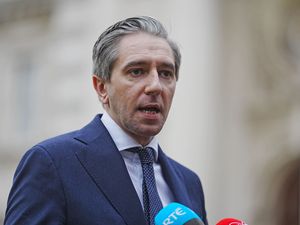
The Irish government has confirmed that there has been “no change” to the country’s security status amid increasing tensions in the Gulf region. On Tuesday, Tanaiste Simon Harris addressed the media, stating that officials are closely monitoring the global situation and assessing any potential impacts on Europe.
As conflict escalates, the Irish Government estimates that between 22,000 and 23,000 Irish citizens are currently in the affected area. Foreign Affairs Minister Helen McEntee noted that a “relatively low number” of citizens had already departed from the region. Harris emphasized that “all options are on the table” to assist those who may need help returning home.
The Tanaiste outlined possible measures, including chartering flights to facilitate evacuation. He mentioned that while the resumption of commercial flights seems unlikely at the moment, options exist for connecting with nearby countries like Oman. He stressed the need for safety when considering routes into the conflict zone.
McEntee’s department is compiling a list of vulnerable Irish citizens requiring assistance, such as the elderly, pregnant women, and individuals with medical conditions. While airlines are prioritizing those caught in transit without accommodation, McEntee confirmed that her officials are working on a separate list to ensure that the most vulnerable are prioritized for any chartered flights.
Government Calls for De-escalation
In light of the ongoing conflict, Taoiseach Micheal Martin asserted that there was “no question” that recent US strikes on Iran occurred without a United Nations mandate. He called for immediate de-escalation and urged a return to diplomatic negotiations. Martin expressed concerns regarding the current structure of the UN Security Council, stating, “The UN is in urgent need of reform and the Security Council as it’s currently constituted is not fit for purpose because of its composition.”
He pointed to Iran’s influence in the Middle East, citing its support for militant groups as a significant factor contributing to regional instability. Martin reiterated the importance of moving towards negotiations to restore stability in the area.
The Taoiseach acknowledged the challenges faced by the international community in engaging with regimes that are perceived as repressive, like Iran. He emphasized the need for a strategic approach to ensure that changes can be encouraged within such governments.
Ongoing Diplomatic Engagements
In response to queries about her communication with US and Israeli officials regarding the safety of Irish citizens, McEntee affirmed that she has made her concerns clear. She highlighted that the conflict does not have congressional support and lacks a UN mandate, which reflects Ireland’s position on the matter.
McEntee stated, “We want this conflict to end as soon as possible, we’ve made that very clear.” She noted ongoing engagements with international counterparts to discuss the situation and ensure the safety of Irish nationals abroad.
As the situation develops, the Irish government remains committed to providing assistance and support to its citizens in the Gulf region while advocating for a peaceful resolution to the conflict.