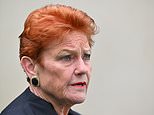
UPDATE: Controversial remarks by One Nation leader Pauline Hanson have sparked outrage after she claimed parts of Australia, specifically the Sydney suburb of Lakemba, have become places that “people can’t go to” without feeling unsafe. This statement was made during an interview on February 18, 2026, on ABC TV, igniting immediate backlash from various community leaders and politicians.
Hanson’s comments were directed at areas where she believes some Australians feel uncomfortable visiting. “It concerns me greatly that people can’t go into certain suburbs in this country… And I’ve been there myself and you feel unwanted, you do not want to be there,” she stated emphatically. When pressed further, she directly named Lakemba, highlighting its significance in this heated dialogue.
Her controversial views do not stop there. In a separate interview earlier this week, Hanson controversially suggested that there were “no good Muslims” and warned that future generations would suffer if more followers of Islam were allowed into Australia. However, when questioned about these remarks, she attempted to clarify, stating, “No, I don’t genuinely believe that,” while still maintaining her critical stance on Islam.
The president of the Australian National Imams Council, Shadi Alsuleiman, strongly condemned Hanson’s remarks, describing them as a serious misunderstanding of Islam. “For many years, she has made inaccurate and harmful statements based on misinformation rather than genuine engagement,” he said, emphasizing the positive contributions Muslims have made to Australian society.
Opposition from within the political community is growing. Matt Canavan, a member of the Nationals, stated, “This statement from Pauline was divisive, inflammatory… It’s un-Australian for someone to say that of those 800,000 Australians who are Muslim, there’s no good people among them.” His comments reflect a broader concern about the language used in political discourse regarding multiculturalism and community safety.
Hanson’s history of provocative statements includes her maiden speech to the Senate in 2016, where she claimed Australia was being “swamped by Muslims,” echoing earlier remarks from 1996 about being “swamped by Asians.” Her recent actions, including wearing a burqa in the Senate, have also drawn widespread condemnation.
As her party, One Nation, continues to gain traction—recent polls show them with a 27 percent primary vote—the implications of Hanson’s remarks on social cohesion and community relations in Australia are profound. The ongoing debate reflects a nation grappling with issues of identity, safety, and multiculturalism.
Next steps: Community leaders and political figures are expected to respond further, and discussions on the implications of Hanson’s statements will likely continue to unfold in the days ahead. The urgency of addressing these divisive narratives is critical as Australia moves forward in its quest for unity amidst diversity.
Stay tuned for more updates on this developing story.